c5c787d5bfa16b07b796a1f9649b868c.jpg

Sygnus Foundation gives Riverton students back-to-school boost

Sygnus Foundation gives Riverton students back-to-school boost


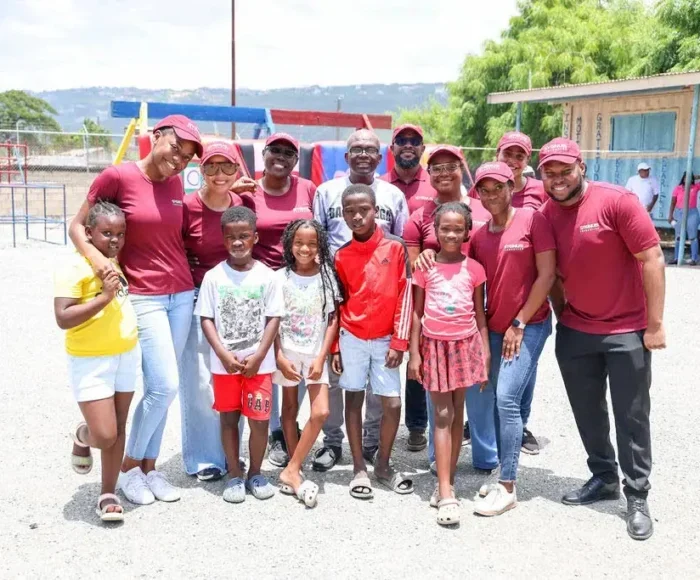
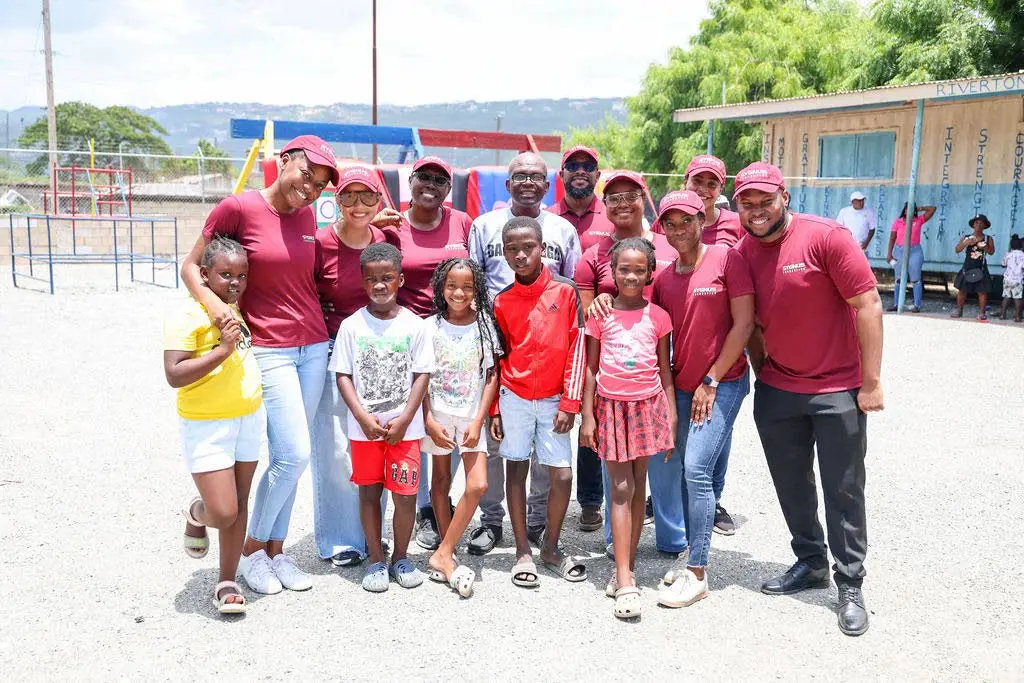
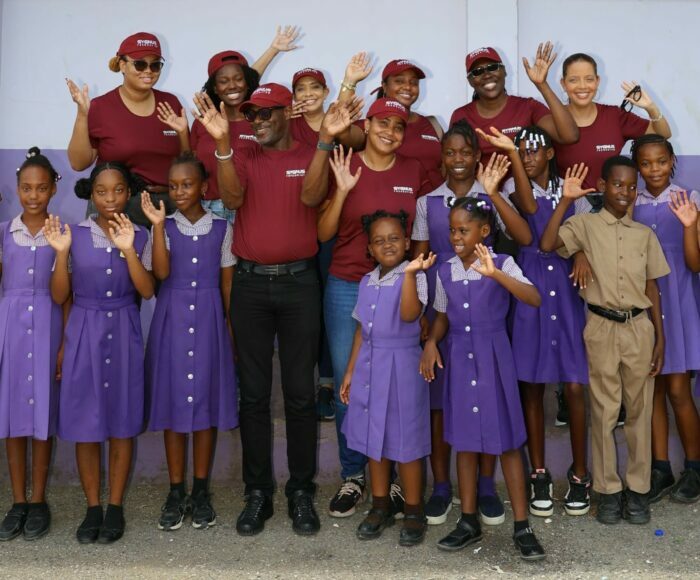
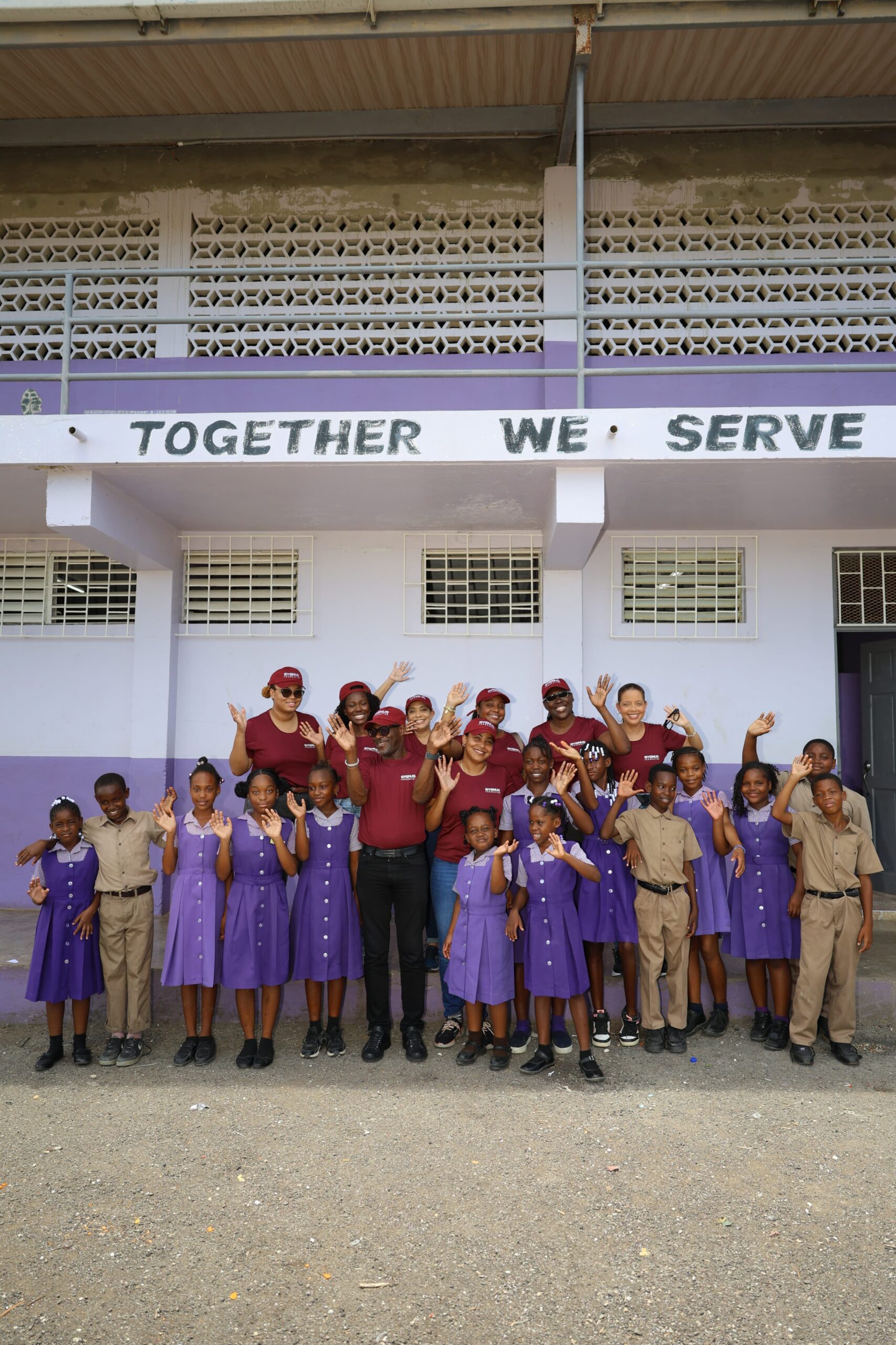
As Sygnus celebrates its 10th anniversary and a new chapter through the Sygnus Foundation, members of the team joined the principal and students of the Riverton Meadows Early Childhood Centre during a recent back-to-school initiative.

AS part of its 10th anniversary celebrations Sygnus underscored its commitment to creating meaningful impact in communities, through the recently launched Sygnus Foundation, with a back-to-school initiative hosted at the Riverton Meadows Early Childhood Centre.

The initiative, undertaken in partnership with Sygnus Real Estate Finance Limited, provided targeted back-to-school support to 25 students at the centre, including school uniforms, book vouchers and assistance towards school fees.

The support was designed to help students and their families prepare for the new academic year while ensuring that children have some of the essential resources needed to begin the school term ready to learn.

The initiative also represented a continuation of Sygnus’ long-standing partnership with the St Patrick’s Foundation, which operates the Riverton Meadows Early Childhood Centre.

“Our partnership with Sygnus has been a long-standing and meaningful one, and we are grateful that they continue to invest in the children and families we serve.

“This back-to-school initiative goes beyond providing practical assistance; it gives our students the encouragement and confidence to begin the school year on a positive note. We value Sygnus’s continued commitment to the Riverton community and look forward to building on this partnership as we work together to create greater opportunities for our children,” said Hermaine Metcalfe, chairperson of the St Patrick’s Foundation.

The back-to-school support was complemented by a treat for children in the Riverton community. The event provided the children with an opportunity to enjoy a day of fun and fellowship ahead of the new school year.

For the Sygnus Foundation, the initiative reflects its purpose which was recently launched as part of the company’s 10th anniversary celebrations.

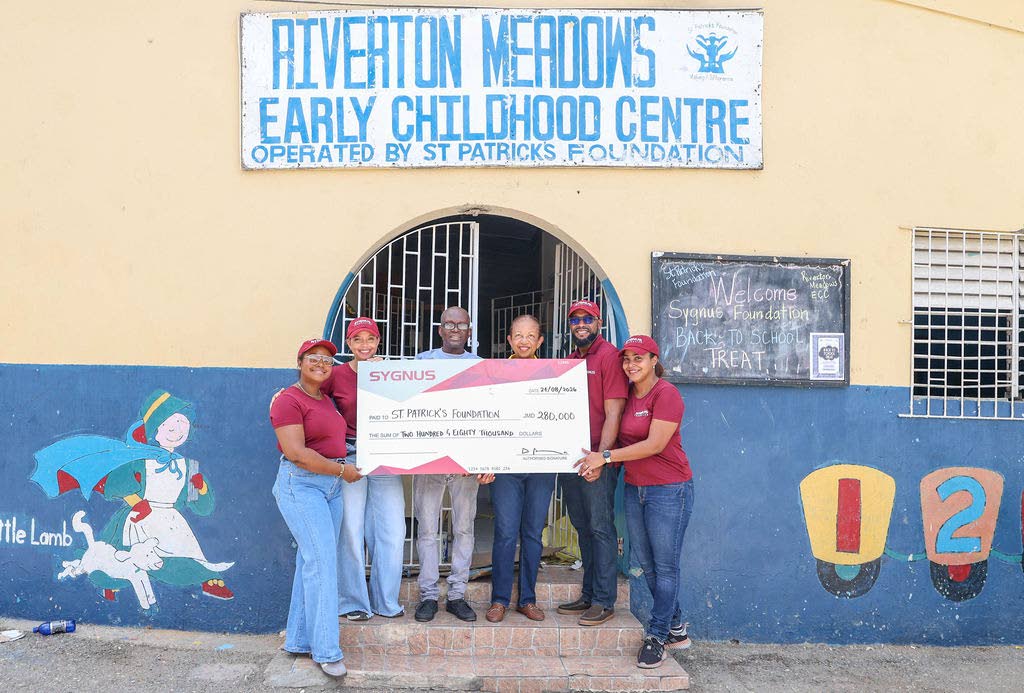
Members of the Sygnus team join representatives of St Patrick’s Foundation and Riverton Meadows Early Childhood Centre for the presentation of back-to-school support to students as part of Sygnus’ continued commitment to education and community development. Pictured are (from left) Annadeen Nembhard, head of people, culture and talent management at Sygnus Capital; Elizabeth James, vice-president and head of wealth and client strategy at Sygnus; Junior Rowe, Principal of Riverton Meadows Early Childhood Centre; Hermaine Metcalfe, chairperson for St Patrick’s Foundation; Dwyane Pryce, assistant vice-president, real estate and project finance at Sygnus; and Renee Rickards, senior marketing manager at Sygnus.

According to Sygnus, the foundation was established to build on the company’s long-standing commitment to supporting communities and creating opportunities that can have a meaningful and lasting impact.

Elizabeth James, vice-president, wealth and client strategy, said, “As Sygnus celebrates 10 years, we are proud to strengthen our commitment to communities through the Sygnus Foundation. Our continued partnership with the St Patrick’s Foundation reflects the meaningful relationships we have built over the years, and we are pleased to support these students as they prepare for the new school year.”

The support was welcomed by the Riverton Meadows Early Childhood Centre Principal Junior Rowe, who highlighted the value of both the practical assistance and the opportunity for the children in the community to come together and enjoy the back-to-school treat.

“We are extremely grateful to Sygnus for continuing to support our students and other children in the community and for making this back-to-school season a little brighter for them. The assistance provided will help families with some of the expenses associated with returning to school, while the treat gave the children an opportunity to simply have fun, interact with their friends and look forward to the new school year.

“We value our relationship with Sygnus and the St Patrick’s Foundation, and we appreciate their continued investment in our children,” said Rowe.

The Riverton Meadows initiative builds on Sygnus Foundation’s growing programme of impact, which focuses on education, community development, health and wellness, and environmental sustainability through purposeful giving, strategic partnerships and hands-on engagement.

It followed the foundation’s first major project, a $16-million rehabilitation of Barbary Hall Primary and Infant School after damage caused by Hurricane Melissa, which restored safer, more functional learning spaces and underscored Sygnus’s commitment to education and community engagement.


https://www.jamaicaobserver.com/2026/09/01/sygnus-foundation-gives-riverton-students-back-school-boost/

391e5ccbbc5cfdba2fdeec3fb1934d43 copy

The middle order of Caribbean capital

The middle order of Caribbean capital


Justine Powell.

Every Caribbean country wants more successful businesses. We celebrate entrepreneurship, invest in programmes to support enterprise, and encourage innovation at every stage. Yet relatively little attention is paid to what happens after an idea becomes a business and after that business identifies an opportunity to grow.

How are expansions financed? How are acquisitions funded? How does a development project graduate to a stable, income-generating asset?

These questions point to a reality that is often overlooked. Economic growth depends not simply on the availability of capital, but on the availability of the right type of capital at the right stage of development.

Businesses and projects rarely rely on a single source of financing throughout their lifecycle. Instead, they move through a continuum. At one end sit founders and sponsors, who bear the earliest risks and provide the capital required to transform ideas into viable enterprises. At the other end sit larger and typically less expensive pools, including commercial banks, institutional lenders, pension capital, and public markets, which are critical to scaling businesses and financing mature assets. But these providers generally require predictability, scale, and demonstrated repayment capacity before they will participate.

Between these two ends of the spectrum sits a range of providers that includes venture capital, private credit, private equity and development finance. This segment of the financial ecosystem is the middle order of Caribbean capital markets. In cricket, the middle order consists of batsmen who come in after the foundation is set and before the innings is closed out. They must demonstrate technical soundness, skill and composure to adapt their play to whatever the innings demands. They rarely receive the recognition afforded to the openers or the finishers, but they are often who determine whether a promising start becomes something substantial.

Commercial banks play an indispensable role in every economy but their mandate is not to finance every type of risk. Regulatory frameworks such as Basel III appropriately strengthened banking systems following the global financial crisis, reinforcing the importance of prudent lending and sound capitalisation. As a result, banks are most effective when lending against established cash flows, tangible collateral, and demonstrated repayment capacity. Many growth opportunities do not fit comfortably within that framework, not because they are unsuitable for financing but because they require a different type of capital.

Public markets face a different set of constraints. Across the Caribbean our capital markets remain limited in depth, but even in more developed markets, public markets are not designed to serve businesses at certain stages. Listing requires audited financials, sustainable earnings, scale, and the ongoing governance demands of a regulated environment. These are characteristics that most growing businesses and projects are still working toward. Public markets function best as a destination for mature businesses, not as a vehicle for getting them there.

Both banks and public markets, in other words, sit at the end of the capital formation journey. How they get there is precisely where alternative capital becomes essential.

 
What makes this work more demanding than it appears is that the businesses most in need of growth capital are often those at an earlier stage of institutional development, with governance, reporting, and operational frameworks that are still maturing. Strengthening those foundations is as much the work as providing the financing itself. Alternative investors operating in this space take on real risk in illiquid markets with limited price discovery. Pricing that risk appropriately is what makes the model sustainable and repeatable. The measure of success is not simply whether a deal performs. It is whether the investment leaves the business better positioned to attract larger, cheaper capital on the other side.

This is why the concept of bankability matters so much. A bankable business or project is one that possesses the characteristics required to attract conventional lenders on sustainable terms. A business that secures five million dollars of alternative capital today may access twenty million dollars of commercial financing later because the initial investment improved its governance, reduced key risks, and demonstrated what the business is capable of at greater scale.

Bankability is frequently the outcome of alternative investment, not the prerequisite for it

The Caribbean’s financial ecosystem has grown considerably more sophisticated over the past decade. New pools of private capital have emerged, alternative investment platforms have expanded, and investors have become increasingly comfortable financing opportunities that fall outside traditional lending models.

But the middle order’s work has only just started. The gap remains consequential, and its cost is not abstract. It shows up in growth rates, employment figures, and the pace at which productive assets come online across the region.

The economies that prosper over the coming decades will not necessarily be those that produce the most entrepreneurs. They will be those that build financial ecosystems capable of supporting businesses and projects through every stage of growth.

Justine Powell is vice-president of investment management at Sygnus Capital Limited, the Caribbean’s leading alternative investment manager with over US$700 million in assets under management.


https://www.jamaicaobserver.com/2026/08/26/middle-order-caribbean-capital/


54af51384760cdd808d978ee5e9d1bd2.jpg

Sygnus deepens Bahamas presence with IDB Invest facility

Lakespen drives profit at Sygnus


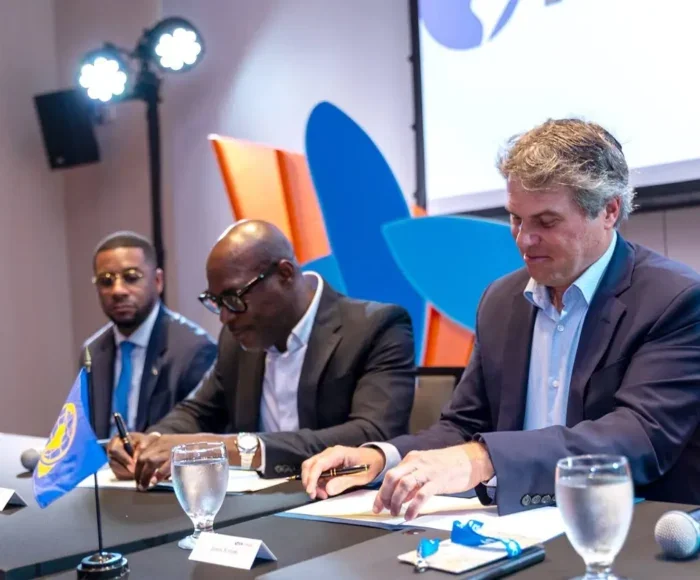
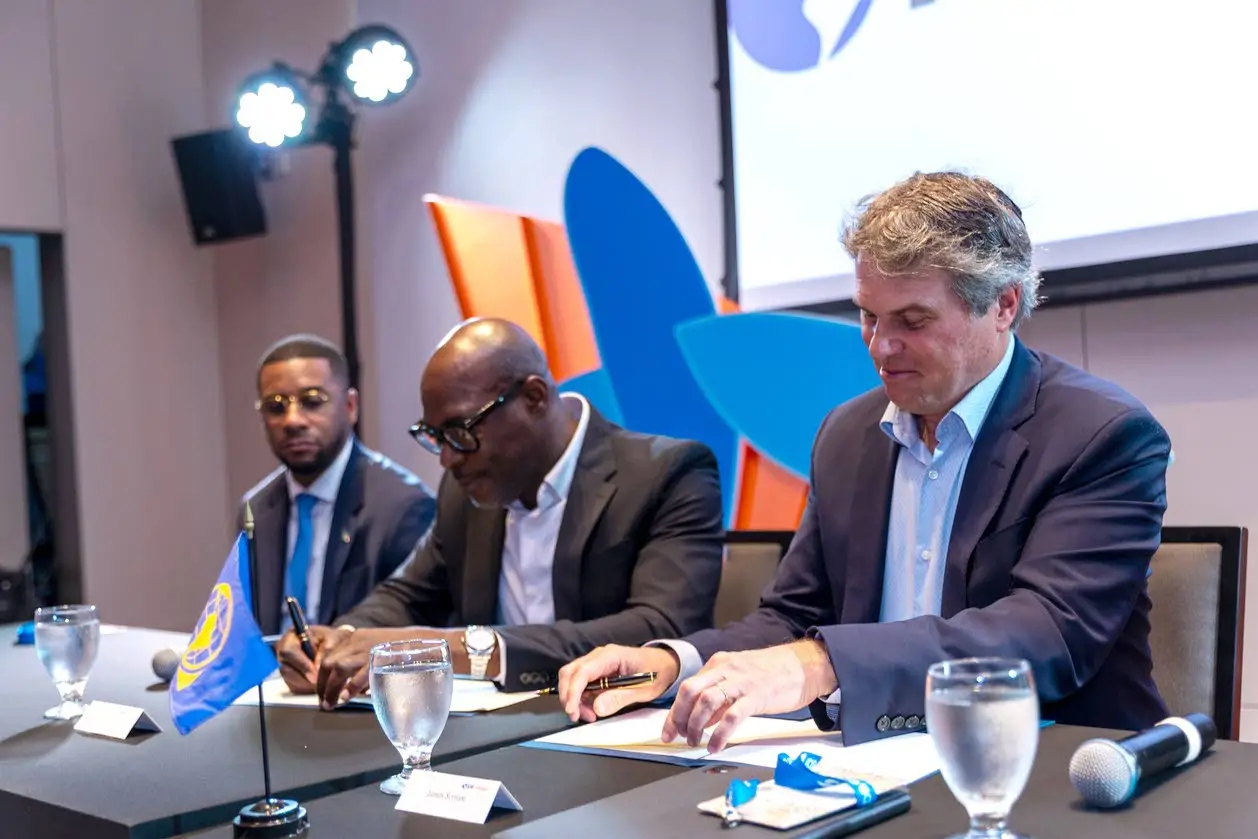
Berisford Grey (centre), co-founder, president and CEO, Sygnus Capital Limited, and James Scriven (right), CEO of IDB Invest, sign documents marking the partnership to support receivables financing for eligible businesses in The Bahamas.


SYGNUS Investment Bahamas Inc (SIB) has begun the phased rolled out of a receivables purchase platform supported by an uncommitted revolving working-capital facility of up to US$10 million from IDB Invest.

Sygnus Credit Investments Limited (SCI) is making an equity investment in SIB and guaranteeing the facility, further deepening the listed private-credit company’s exposure to The Bahamas.

IDB Invest approved the facility in July 2025, and its project page lists June 2, 2026 as the signing date. The Government of The Bahamas will initially be the underlying obligor on the invoices purchased, with the funding targeted at receivables owed to approved small and medium-sized enterprise (SME) suppliers.

The facility will allow SIB to purchase approved Government invoices from Bahamian SMEs, giving the suppliers access to cash before the Government’s normal payment date. Under the arrangement, SIB will buy the receivables at a discount and collect the full invoice value when the Government settles the obligation.

The platform will initially focus on verified receivables linked to public-sector and infrastructure-related projects. Its longer-term ambition is to onboard a broader base of eligible Government suppliers and stable blue-chip private-sector companies.

“This solution is anticipated to provide liquidity to SMEs in The Bahamas by purchasing short-term receivables with maturities ranging from three months to less than a year. Additionally, this [working capital] line will deepen the local capital market by introducing new securities that offer liquidity to SMEs without them incurring additional debt,” the IDB’s project page explained.

Sygnus Investment Bahamas is described as being a member of the Sygnus Capital Group as per the press release. SIB was incorporated in August 2024 as an international business company with Legis Limited and Lex Limited as initial subscribers. Sygnus Capital Limited co-founders Berisford Grey and Jason Morris are listed as directors of the company which had an initial capital base of US$50,000.

The press release explained that the receivables platform was supported by the IDB Invest facility and an initial equity investment of approximately US$1 million by SCI which can scale up to US$5 million over time. SCI is described as an anchor investor of Sygnus Investment Bahamas.

The IDB’s project page explained that the working capital line to Sygnus Investment Bahamas would be 100 per cent guaranteed by Sygnus Credit Investments. The receivables purchases by Sygnus Investment Bahamas are expected to be short-term with maturities up to 12 months and an average amount of US$2.5 million. The IDB revolving working capital credit line is available for up to five years.

“This partnership represents an important step in our strategy to deepen Sygnus’ presence in The Bahamas while delivering a practical solution to a real business challenge,” said Gregory Hines, vice-president, asset backed investment & projects, Sygnus Capital Limited, in the press release.

Apart from financing, IDB Invest and Sygnus Capital will collaborate on developing market studies to identify priority sectors, supplier segments, and areas of unmet working capital need in The Bahamas. IDB Invest will provide advisory services to help develop a comprehensive receivables financing program which includes operational processes, digital onboarding for SMEs, performance measurement and compliance frameworks.

“At its core, this platform is about helping Bahamian businesses convert earned receivables into liquidity faster and more predictably. Our focus is on building a disciplined and transparent platform that gives all stakeholders confidence in how receivables are verified, purchased, and settled,” Hines added.

Sygnus Credit Investments currently has 17.4 per cent of its core US$183.01 million private credit portfolio, excluding Puerto Rico, allocated to the Bahamas which is its third largest market. SCI previously funded a US$25 million project in Exuma for the Bahamas Striping Group of Companies in 2022 while Sygnus Capital lead a US$9 million fundraise for a project at Eight Mile Rock, Grand Bahama.

SCI expected to access approximately US$50 million in new credit lines during its 2027 financial year which began on July 1. This is on top of SCI’s expected draw down on the US$10 million credit facility with World Business Capital (WBC) and raising US$25 million via a preference share during its first quarter which ends on September 30. This was stated in Caricris’ recently published report on SCI.

SCI’s full year June 2026 numbers should become available by August 29.

SCI’s net profit for the nine-month period was down 30 per cent from US$6.97 million to US$4.85 million due to increased loss provisions from companies affected by Hurricane Melissa, lower interest income and fair value gains from its Puerto Rican investment. SCI received US$1.83 million in dividends from its investment Sygnus Credit Investments Puerto Rico Fund LLC.

SCI’s total assets were up 10 per cent to US$242.83 million with US$226.69 million in investments and US$2.02 million in cash. Total liabilities and equity were US$166.81 million and US$76.02 million, respectively. Jamaica is SCI’s largest core private credit market with a 40.5 per cent allocation followed by St Lucia having a 22.2 per cent allocation.

SCI’s Jamaican dollar (JMD) shares closed Monday at $9.23 which leaves it down 22 per cent year-to-date (YTD). The JMD shares traded at a new 52-week low of $9.01 on June 30. The United States dollar shares are down 22 per cent YTD at US$0.0508, with a 52-week low of US$0.0480 on July 22.


https://www.jamaicaobserver.com/2026/07/29/sygnus-deepens-bahamas-presence-idb-invest-facility/

6a669963a3773.image

Sygnus launches receivables purchase platform

Sygnus launches receivables purchase platform


Gregory Hines


Alternative investment firm {/span}Sygnus Investment Bahamas Inc. (SIB) has launched a new receivables purchase platform aimed at helping Bahamian businesses unlock cash tied up in unpaid invoices, backed by institutional funding of up to $10 million from IDB Invest and additional capital from the Sygnus Group, a statement from Sygnus revealed.

The statement explains that the platform will initially target approved government suppliers and contractors with verified receivables linked to public-sector and infrastructure projects, before expanding to a broader range of government suppliers, small and medium-sized enterprises (SMEs) and private sector counterparties.

Sygnus said SMEs account for approximately 98 percent of business licenses in The Bahamas and employ about 47 percent of the workforce, making access to working capital critical to the sector.

The receivables purchase platform is expected to serve businesses operating in construction, infrastructure, tourism, hospitality, manufacturing, information and communications technology, utilities and other service industries.

The company said the platform will initially be rolled out through a controlled pilot before evolving into a technology-enabled system featuring digital onboarding, invoice submission, verification and payment processing.

Sygnus and IDB Invest will also collaborate on market studies to identify sectors and businesses with the greatest working capital needs, including women-led businesses and other high-impact SME categories.

The initiative also seeks to deepen The Bahamas’ financial markets by creating an avenue through which institutional capital can be invested in receivables-backed assets linked to real economic activity.

“At its core, this platform is about helping Bahamian businesses convert earned receivables into liquidity faster and more predictably,” Hines said.

“Our focus is on building a disciplined and transparent platform that gives all stakeholders confidence in how receivables are verified, purchased and settled.”

The Bahamas was selected as the first market for the initiative because of opportunities associated with the government’s infrastructure program and the country’s active private sector, Sygnus said, adding that it intends to evaluate expansion across the wider Caribbean over time.

A $43 million government obligation related to infrastructure works carried out under a public-private partnership (PPP) arrangement became at point of contention between the government and the opposition, with Minister of Finance Michael Halkitis having to defend a similar kind of transaction as standard financial practice, while Free National Movement (FNM) Leader Michael Pintard is questioning why the arrangement was structured in the way it was.

The issue stemmed from contractors involved in infrastructure projects selling receivables owed by the government to the African Export-Import Bank (Afreximbank) through a factoring arrangement.


Sygnus launches receivables purchase platform | Business | thenassauguardian.com


8499866

Lakespen drives profit at Sygnus

Lakespen drives profit at Sygnus


The real estate development firm Sygnus Real Estate Finance Limited (SRF) has reclassified and revalued assets at its Lakespen Industrial Park during its latest quarter, resulting in a 193 per cent rise in profit to $444.3 million.

“Lakespen development had a favorable gain of $806.9 million recorded during the period,” Chief Investment Officer Jason Morris told shareholders during the company’s earnings briefing.
During the quarter, the company reclassified $5.0 billion worth of land and infrastructure costs related to the Lakespen development at Cowpark, Caymanas Estate, as the project transitioned from investment property to active development.

“This represents parcels of land currently being developed as saleable lots situated at Bernard Lodge, St. Catherine. Construction commenced in March 2026, and development in progress costs consist of expenditure directly attributable to the development,” the company stated in its latest quarterly filings.

The one-off revaluation gain on the Lakespen lands was higher than the profit earned in the quarter. SRF reported net profit of $444.3 million for the quarter ended May 31, 2026, compared with $151.7 million in the corresponding period last year, according to unaudited financial statements released on July 15.

He explained that the gain arose after construction commenced on the development in St. Catherine. The $806.9 million gain appears in the financial statements as a change in fair value of investment properties, which brought the investment property portfolio to $6.73 billion at the end of the reporting period, down from $10.73 billion at the start of the period following the $4.86 billion transfer to development in progress.

The executive added that investors should not expect similar gains to recur related to that property.
“This value won’t change until we are exiting at the end of the project,” Morris said. “So there won’t be any more favorable gains coming through due to the change in the accounting treatment for Lakespen. I want to highlight that.”

The earnings call also reinforced what Morris has repeatedly described as the “lumpiness” of SRF’s results. Because the company invests in and develops large-scale real estate assets whose values are often reassessed periodically, profits can fluctuate significantly from quarter to quarter.
“Typically, due to SRF’s long-term nature,” Morris said, “what we would have is a quarter of the financial year being negative and the year-end being positive on the valuation.” He noted that this quarter’s results were unusual because a major valuation event occurred during the third quarter rather than at year-end.

The future pace of reported earnings from Lakespen will therefore depend less on valuation gains and more on the execution of lot sales and project exits.
Early demand for the industrial park appears encouraging.

Jonnell Whervin, SRF’s senior development project manager, said the sales process has already generated meaningful market interest.
“We have 55 acres with 34 lots available, ranging from 0.8 acres to 3 acres. And, as mentioned, the sales process is currently underway. We’re between reservations and under-offers, we’re approximately at 33 per cent,” Whervin told shareholders.

Whervin said Lakespen has been designed with resilience and security as key selling points. The development will feature underground electrical infrastructure aimed at reducing storm-related disruptions, as well as perimeter security measures including an eight-foot boundary wall and armed-response capabilities. She also highlighted progress on other SRF assets.
At Mammee Bay in St. Ann, a beachfront property located along the island’s tourism corridor, SRF is conducting due diligence and planning work aimed at unlocking value from the site. The property is situated near several major hotel developments.

Meanwhile, at the beachfront Delphin property in Trelawny, management is continuing planning and due diligence efforts as it evaluates development opportunities. The site is located near major resort properties and close to Sangster International Airport.

Whervin also reported steady progress at One Belmont, SRF’s commercial development. A third tenant has begun moving into the property, with occupancy activity expected to increase over the coming weeks.

Looking ahead, investors are likely to focus on whether SRF can convert interest in Lakespen into completed sales and cash realizations. While the quarter benefited from a substantial one-off valuation uplift, management’s message was clear: future performance will be driven by project execution, successful exits, and the company’s ability to crystallize value across its portfolio rather than by further accounting gains from Lakespen.


https://jamaica-gleaner.com/article/business/20260719/lakespen-drives-profit-sygnus

building

Sygnus eyes US$25-m raise

Sygnus eyes US$25-m raise


Sygnus Credit is set to raise US$25 million very shortly to support its expansion plans.


Sygnus Credit Investments Limited (SCI) is moving to raise US$25 million ($3.90 billion), through a preference share issue as it seeks additional capital for its growing deal pipeline.

The planned raise was disclosed in the latest report from Caribbean Information and Credit Rating Services Limited (CariCRIS), which reaffirmed SCI’s CariBBB- and jmBBB+ credit ratings.

The private credit firm has been actively pursuing additional sources of capital to fund demand from its client pool of medium sized companies.

“To support its FY2027 pipeline, SCI is negotiating new revolving credit facilities of approximately US$50 million with international financing partners, alongside an additional US$25 million preference share issuance targeted for completion in Q1 FY2027,” CariCRIS stated.

SCI provides private credit to medium sized companies through instruments such as short- to medium-term debt, receivables refinancing, and commodity or sales repurchase agreements. Its earnings depend partly on how quickly it can raise capital and redeploy that capital into higher-yielding investments.

SCI raised US$32.97 million in December 2024 via two classes of perpetual preference shares and a net amount of US$48.99 million in December 2023 via three classes of redeemable preference shares. Both of those issuances were done via public offerings. The company extended the class C and D preference shares in December 2025 by three years and reduced its annual financing costs by at least US$148,398. SCI’s class E preference share (8.50 per cent US$) is set to mature in December 2026 at US$10 per share with a face value of US$23.22 million.

SCI is currently expected to tap a US$10 million credit facility from World Business Capital in the July to September quarter. This facility was delayed after the change in the US administrative leadership in January 2025. This is on top of the company seeking to engage other international financing partners for up to US$100 million in revolving credit lines.

“We are working on another term sheet and advancing that with another international financing partner. So, we are basically having a very diversified financing plan where we are tapping multiple sources all at the same time,” said Sygnus Capital co-founder Jason Morris at SCI’s May 19 earnings call.

SCI’s ability to access capital and ability to deploy it quickly enough impacts its overall earnings profile. Morris noted that SCI had received US$20 million in repayments during the company’s nine-month earnings period, but that the deployment of those funds was slower than expected. The slower reinvestment of SCI’s capital and a US$1.24 million one-time adjustment were responsible for an eight per cent dip in interest income to US$13.90 million for the nine-month period ending March 31.

“This delay was largely attributable to the adverse impact of Hurricane Melissa in October 2025, which disrupted communications and third-party legal and professional services required to close transactions. As a result, cash increased significantly, and management noted that the funds were subsequently redeployed during Q3 FY2026,” CariCRIS explained in its recent report.

With SCI’s growth profile falling below CariCRIS’ target, the regional ratings agency changed SCI’s outlook from positive to stable. The change to a stable outlook does not signal an expected deterioration in SCI’s performance. Rather, it indicates that growth is now expected to be slower than CariCRIS had previously anticipated.

Despite the reduced earnings profile in SCI’s most recent financial report, Morris is confident of the opportunities ahead for SCI in Jamaica where the company is seeing most of the demand from its US$30 million in approved deals. SCI noted that US$20.23 million of its Jamaican investments were affected by Hurricane Melissa, but this represented 11.1 per cent of the Jamaican portfolio and just 6.8 per cent of the combined SCI portfolio.

“I think for the next two to three years there will just be a lot of Jamaican opportunities ranging from companies who are taking advantage of new emerging opportunities that would have arisen based on just the state and nature of what would have come out of Hurricane Melissa,” Morris noted.

CariCRIS even pointed out that the recent rate cut by the Bank of Jamaica should benefit SCI’s fixed-income asset repricing and overall spread. It stated, “In CariCRIS’ view, the anticipated improvement in economic conditions in Jamaica, alongside the lower policy rate, should support SCI’s performance through stronger outcomes among its portfolio companies and a lower cost of funding.”

SCI’s net profit for the nine-month period was down 30 per cent from US$6.97 million to US$4.85 million due to increased loss provisions from companies affected by Hurricane Melissa, lower interest income and fair value gains from its Puerto Rican investment. SCI received US$1.83 million in dividends from its investment Sygnus Credit Investments Puerto Rico Fund LLC.

SCI’s total assets were up 10 per cent to US$242.83 million with US$226.69 million in investments and US$2.02 million in cash. Total liabilities and equity were US$166.81 million and US$76.02 million, respectively.

SCI’s Jamaican dollar shares closed Thursday at $9.92 which leaves it down 16 per cent year-to-date (YTD). The United States dollar shares are down nine per cent YTD at US$0.0598.

The company’s US$9-million share buyback programme ended in June 2026 after SCI repurchased US$829,726 in shares over the period. Morris indicated that the programme is likely to be renewed, but said the company will continue to weigh buybacks against other uses of capital.

“Obviously, we have not done any buyback so far, but the buyback programme still remains intact. The programme is not going anywhere. It’s just a matter of what’s the best use of the capital,” Morris said.


https://www.jamaicaobserver.com/2026/07/03/sygnus-eyes-us25-m-raise/


IFC-1-rpum68r0jc7gsvsb6t9gve1aexsogw5ppr7bq3vrhq

Guyana to benefit from US$15M IFC investment in CARICOM Resilience Fund

Guyana to benefit from US$15M IFC investment in CARICOM Resilience Fund


The investment, the IFC’s first debt-fund transaction in the Caribbean, is expected to expand access to financing for medium-sized enterprises, while supporting resilience and sustainability projects, including critical infrastructual investments, that drive economic growth and job creation across the region.

Established to mobilise long-term capital for climate resilience and sustainable development, the CCRF platform is designed to address financing gaps that have historically constrained private-sector growth throughout the Caribbean. Through the CCRF Debt Sub-Fund, financing will be deployed across 13 countries: Antigua and Barbuda, The Bahamas, Barbados, Belize, Dominica, Grenada, Guyana, Jamaica, Saint Kitts and Nevis, Saint Lucia, Saint Vincent and the Grenadines, Suriname, and Trinidad and Tobago.

The fund will focus on seven priority sectors critical to the region’s long-term development and resilience: energy, water, agriculture, housing, transportation, financial services, and information and communications technology. Investments will support businesses and projects that strengthen economic resilience, improve productivity, expand access to essential services and create sustainable employment opportunities across participating countries.

“Building a more resilient and sustainable Caribbean is central to Sygnus’ mission, and IFC’s investment represents a significant milestone for both the CCRF platform and the region,” said Berisford Grey, Co-Founder, President and CEO of Sygnus. “Through the CCRF Debt Sub-Fund, we are expanding access to long-term financing for medium-sized enterprises, while supporting investments that strengthen critical sectors, unlock economic opportunity and contribute to job creation across Caribbean economies.”

Across the Caribbean, limited access to long-term financing continues to constrain business growth and private sector investment. Domestic credit in the region’s small states stands at just 32.8 per cent of GDP, while the estimated financing gap exceeds US$22 billion. The CCRF Debt Sub-Fund was developed to help bridge this gap by providing flexible capital solutions tailored to the needs of growing businesses and transformative development projects.

“This timely and pioneering investment highlights the critical role that flexible private capital can play in unlocking opportunities across the Caribbean,” said Elizabeth Martinez de Marcano, IFC Division Director for the Andean Countries and the Caribbean. “Innovative vehicles like the CCRF Debt Sub- Fund deliver customized financing solutions that enable medium-sized enterprises to operate effectively, expand, and generate employment.”

The Caribbean remains among the world’s most climate-vulnerable regions, facing recurring threats from hurricanes and other natural hazards that can reverse years of development gains.

The impact of Hurricane Melissa in 2025 highlighted the urgent need for greater investment in resilient infrastructure, sustainable development and innovative financing solutions, as the Category 5 system caused significant damage and disruption across parts of the Caribbean, including Jamaica, The Bahamas and Dominica. Strengthening resilience through strategic investments is therefore critical to helping countries and businesses prepare for, withstand and recover from future shocks.

This initiative aligns with the World Bank Group’s Small States Strategy, which focuses on strengthening resilience, expanding economic opportunities, and mobilising private capital in small and vulnerable economies. It also supports broader regional efforts to advance sustainable development and build stronger, more resilient Caribbean economies.

IFC will invest up to US$15 million in the CCRF Debt Sub-Fund, which is targetting US$75 million, scalable to US$125 million. IFC’s investment comprises up to US$5 million in the senior tranche and up to US$10 million in the mezzanine tranche. The fund will allocate up to 70 per cent of the capital commitment to on-lending for medium-sized enterprises, with the remaining 30 per cent directed towards resilience and sustainability projects across the Caribbean.

The IFC — a member of the World Bank Group — is the largest global development institution focused on the private sector in emerging markets. The  IFC works in more than 100 countries, using its capital, expertise, and influence to create markets and opportunities in developing countries.

In fiscal year 2025, IFC committed a record $71.7 billion to private companies and financial institutions in developing countries, leveraging private-sector solutions, and mobilising private capital to create a world free of poverty on a livable planet.

Sygnus is a leading alternative investment firm in the Caribbean and Latin America, dedicated to driving economic development across the region through creative and innovative financing solutions. By offering a range of investment alternatives, including private credit, real estate financing, private equity, and impact investing, Sygnus addresses unmet demands, unlocking capital for growing enterprises and playing a pivotal role in regional economic growth.

The cutting-edge alternative investment (AI) platform is fuelled by transformative strategies designed to accelerate development across the Caribbean and Latin America. This platform is backed by a team of forward-thinking experts who craft tailored solutions for our clients, complemented by dedicated investment banking and wealth-management services. Sygnus also provides specialised services in Puerto Rico through Sygnus Capital PR LLC, formerly known as Acrecent.


https://guyanachronicle.com/2026/07/03/guyana-to-benefit-from-us15m-ifc-investment-in-caricom-resilience-fund/


FoundersGroup10

Sygnus at 10 – Building capital beyond the banks

Sygnus at 10

Building capital beyond the banks


MORRIS…launching a private credit business, we knew it was going to be a huge educational exercise — teach the market, so to speak. Because if you recall, prior to that, there used to be ponzi schemes that were called alternative investments. And so we couldn’t even use the word alternative.


In the Caribbean, alternative investments or money invested in businesses and projects outside traditional bank loans or stock market funding, barely register.

Even in Jamaica, home to one of the region’s deepest capital markets, the asset class accounts for just a sliver of economic output — well under one per cent of GDP by Sygnus Capital’s estimates.

“It’s still very small. It’s probably less than, certainly it’s less than one per cent. It’s more like 0.05 per cent or thereabout relative to the GDP across the region,” CEO of Sygnus Capital Limited and co-founder of Sygnus Group, Berisford Grey told the Jamaica Observer.

In the United States and other developed markets that figure can run as high as seven to 10 per cent.

In other words, the Caribbean is still playing catch-up. Businesses with viable expansion plans can spend years stuck in a financing no-man’s-land — too complex for traditional bank lending, but not yet suited for public markets. Sygnus Capital turned that gap into a business.

“Even if we should push aggressively over the next decade and get the alternative markets to expand in terms of new asset classes, infrastructure, energy, funds etc, we might just get to three or four per cent of GDP, which would mean that we’d still have a ways to go,” he added, broadening the lens beyond Sygnus to the structural evolution of the Caribbean capital markets.

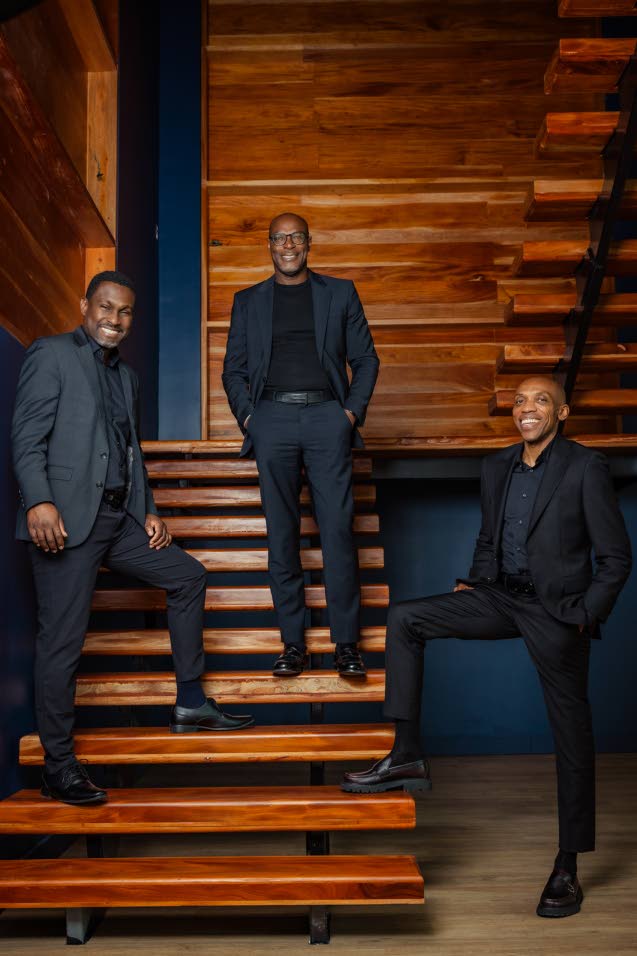
On the seventh floor of One Belmont — the sleek Kingston office tower Sygnus built during the pandemic — the company’s three founders sat in a bright red sectional couch reflecting on a decade of building one of the Caribbean’s most ambitious private capital platforms.

Grey spoke like a strategist, constantly returning to scale and long-term opportunity. Dr Ike Johnson broke down complex structures with almost surgical precision. Jason Morris was more blunt, cutting through financial jargon in a few words.

His simplest line may have best explained the entire business.

“You can get bank financing all day, every day,” Morris, executive VP and chief investment officer at Sygnus Group, said. Then he paused.

“The problem is flexibility…Flexible capital that meets the entrepreneur in their space and is designed to do exactly what they are trying to do, it’s very, very difficult to come by.”

That, more than anything else, is the gap Sygnus has spent the last 10 years trying to fill.

Founded in 2016 by Grey, Johnson and Morris, Sygnus was built around a problem the trio had seen repeatedly during their years in banking and finance.

Medium-size businesses — often profitable, often growing — were struggling to access capital. Not because they were bad businesses but often they simply needed money structured differently.

That is where Sygnus stepped in.

To understand the firm’s rise it helps to first understand what Sygnus is — and what it is not.

Sygnus Group founders (from left) Dr Ike Johnson, Berisford Grey and Jason Morris in discussion at the company’s One Belmont offices in Kingston as the alternative investment firm marks its 10th anniversary.Photo: Joseph Wellington

Sygnus Group founders (from left) Dr Ike Johnson, Berisford Grey and Jason Morris in discussion at the company’s One Belmont offices in Kingston as the alternative investment firm marks its 10th anniversary. (Photo: Joseph Wellington)

It is not a bank. It is not simply a lender either, despite how it is often described.

At the centre sits Sygnus Capital Limited, a licensed securities dealer and investment manager that structures deals, raises capital, and manages specialised investment vehicles.

Those vehicles include Sygnus Credit Investments, or SCI, which provides private credit to middle-market businesses; Sygnus Real Estate Finance, or SRF, which deploys flexible capital into commercial, residential and hospitality developments; Sygnus Deneb Investments, its private equity platform; and the Caribbean Community Resilience Fund, which targets climate and resilience-related investments.

Together, those entities allow Sygnus to deploy capital across multiple layers of the financing stack — debt, equity and hybrid structures — depending on what a business or project actually needs.

The model may sound straightforward today but convincing investors a decade ago to throw support behind not just a new company, but an entirely new business model, was far from easy.

“Launching a private credit business, we knew it was going to be a huge educational exercise —teach the market, so to speak. Because if you recall, prior to that there used to be Ponzi schemes that were called alternative investments, and so we couldn’t even use the word alternative,” Morris told the Sunday Finance.

“Non-traditional investments [was the term used instead]. That’s how we started, and then we slowly, but surely, we had to introduce different terminology to the market. For example, dry powder. Nobody in the market knew about it, and we introduced it…and now, everybody knows what it means,” he continued.

The founders’ credibility and portfolio of work over the years helped. The three had built strong reputations at major financial institutions, with Morris coming from Scotiabank, Grey from CIBC FirstCaribbean, and Johnson from JMMB Group.

“We had a good track record of doing stuff on big platforms but the question was whether we could do it on our own,” Morris said.

“That was a big, big challenge. And what this required was for us to get a few of what I’m going to term anchor investors — investors who would put a large amount of money — and then we used those investors to attract other investors,” he said.

But governance also played a central role in winning that trust.

Institutional investors, Grey noted, were not simply buying into returns projections. They were assessing whether Sygnus had built the kind of independent governance and risk controls capable of managing institutional capital.

That discipline, he said, was embedded in the company’s business model from day one and helped give early investors confidence to commit.

“When we look back at our business plan, and we always laugh about this, our business plan actually had the blueprint. I’m always surprised at the amount of work we did pre the launch of Sygnus,” Grey said.

“We did probably two and a half years of work… In the moment, it’s all fun but when you look back at the documentations, the amount of work that we did to take advantage of the opportunities that came up…” he continued.

With early capital secured and institutional support in place, Sygnus moved quickly from concept to execution. What began as a seven-person start-up soon evolved into a regional investment platform, launching new business lines and deploying capital into opportunities not just in Jamaica, but across the Caribbean.

Sygnus Group founders (from left) Dr Ike Johnson, executive vice-president and chief operating officer; Berisford Grey, chief executive officer of Sygnus Capital; and Jason Morris, executive vice-president and chief investment officer, at the company’s office in Kingston. The alternative investment firm is marking 10 years of operations this year..

Sygnus Group founders (from left) Dr Ike Johnson, executive vice-president and chief operating officer; Berisford Grey, chief executive officer of Sygnus Capital; and Jason Morris, executive vice-president and chief investment officer, at the company’s office in Kingston. The alternative investment firm is marking 10 years of operations this year.

The expansion was deliberate, but ambitious.

In 2017, just a year after launch, Sygnus rolled out Sygnus Credit Investments (SCI), giving investors exposure to private credit and providing medium-size businesses with access to financing, often unavailable through traditional channels. Two years later came Sygnus Real Estate Finance (SRF), expanding the group’s reach into commercial, residential and hospitality developments. Private equity followed through Deneb Investments, widening the firm’s ability to back businesses with long-term growth potential.

In 2022, the group deepened its regional footprint with the acquisition of Puerto Rico-based Acrecent Financial, later rebranded as Sygnus Capital PR, giving it a foothold in private credit, receivables financing, wealth management and corporate advisory services.

Over time, the company’s investment footprint expanded across sectors ranging from real etate and tourism to energy, infrastructure, and financial services.

Today, Sygnus operates across Jamaica, Puerto Rico, St Lucia and the United States, with more than US$700 million deployed in alternative investments. Its team currently stands at roughly 100 people.

Morris points to Bahamas Striping, a Bahamas-based road-marking and infrastructure company, as one example of how Sygnus’s investment model works in practice.

Sygnus funded the company at a stage when larger pools of institutional capital were not yet within reach. That early support helped position the business for significantly larger financing down the line.

Last year, Bahamas Striping secured US$100 million in capital from Afreximbank — a milestone Morris said validated Sygnus’s ability to identify scalable businesses early and help prepare them for institutional funding.

“Just think about the magnitude and scale of that,” he said. “Without Sygnus Credit Investments believing in those entrepreneurs and supporting them by channelling SCI’s pension fund investor capital into that business, that company would not have been in a position to unlock US$100 million in capital.”

Executive Vice-President and Chief Operating Officer Dr Ike Johnson told the Jamaica Observer that such progression speaks to one of Sygnus’s less-visible contributions: The firm does more than inject capital — it helps businesses build the operational discipline needed to scale.

While Sygnus operates outside traditional lending channels, Johnson said its standards around governance, reporting, and capital deployment remain deliberately rigorous.

“When companies accept investment from us there are certain expectations around how they report to us, how they deploy that capital, and what our expectations are around returns,” Johnson said.

Over time, he said, that discipline often leaves businesses stronger, better managed, and ultimately more attractive to traditional lenders.

Eyes on the next decade

Looking ahead, the founders see no shortage of opportunity.

Johnson pointed to Sygnus Deneb Investments, the group’s private equity arm, as one of its strongest-performing business lines, with roughly US$50 million already deployed into growth-stage businesses across the region.

The Sygnus founding trio at the company’s headquarters in Kingston. Over the past decade the firm has deployed more than US$700 million in alternative investments across the Caribbean and international markets.

The firm is seeing particularly strong opportunities in distribution, hospitality, and businesses that support the Caribbean’s tourism-dependent economies.

Climate finance is another area the founders believe could define Sygnus’s next decade.

The scale of the opportunity is massive.

Morris estimates the Caribbean requires roughly US$100 billion in climate- and resilience-related investments annually just to begin addressing the region’s vulnerability to hurricanes, energy insecurity and food shocks.

Through the Caribbean Community Resilience Fund (CCRF), Sygnus is targeting investments in solar energy, electric mobility, agriculture and food security — sectors where the firm believes commercial returns and developmental impact can increasingly co-exist.

“Where the CCRF is playing is where we generate returns,” Morris said. “As an equity investor we expect returns of between 14 and 18 per cent in US dollars, depending on how transactions are structured. If we are doing debt transactions those returns would be lower — typically in the double digits and in some cases even single digits.”

Still, the founders are under no illusion about the risks ahead.

For a business built on deploying capital into complex transactions, macroeconomic instability remains a constant concern. High interest rates, inflation, geopolitical conflict, and climate shocks all have the potential to affect portfolio companies and investor behaviour.

Johnson said that after decades in banking and finance, he has learned that disruption is inevitable.

“In my entire career in banking and finance there’s always something going on,” he said. “Whether it’s war, a hurricane, or another COVID-type event, you have to build a platform that is nimble and has a team of problem-solvers who can respond quickly.”

That resilience, he said, is critical not just for the Sygnus Group of companies but for the businesses it supports, particularly during periods of stress.

Grey agreed, noting that while the company closely monitors macroeconomic risks, those challenges are part of operating in financial markets.

“Preparation is the mother of victory…Whatever the state of nature may be, we have to understand the risks within that scenario and manage around them,” Grey said.

Even so, he remains optimistic about what lies ahead.

For all the growth Sygnus has achieved over the past decade he believes the Caribbean’s alternative investment market is still in its infancy.

And if he is right, Sygnus’s first decade may ultimately be remembered not as the peak of its story but as the foundation for what comes next.


https://www.jamaicaobserver.com/2026/06/28/sygnus-at-10/

 

Sygnus Foundation End

Sygnus Foundation débuts with $16-m roof repair at Barbary Hall Primary

Sygnus Foundation débuts with $16-m roof repair at Barbary Hall Primary


Students of Barbary Hall Primary and Infant School share a moment with members of the Sygnus team during the official launch of the Sygnus Foundation and handover ceremony to mark the completion of the school’s $16-million roof restoration project.

MARKING a major milestone in its 10th year of operation, Sygnus Group has officially launched the Sygnus Foundation while commemorating the completion of a $16-million roof restoration project at Barbary Hall Primary and Infant School in St Elizabeth.

This forms part of the company’s commitment to supporting Jamaica’s recovery and resilience following Hurricane Melissa.

The milestone was commemorated during a special plaque handover ceremony attended by Berisford Grey, president and CEO of Sygnus; Member of Parliament for St Elizabeth South Western and Minister of Agriculture, Fisheries and Mining and Floyd Green; Elizabeth James, vice-president and head of wealth and client strategy at Sygnus; and Danielle Drummond, donor projects coordinator at the National Education Trust (NET).

The investment funded the restoration of the school’s roof, helping to create a safer and more secure environment for teaching and learning.

The completed work has enabled students to return to their classrooms for the first time since Hurricane Melissa impacted the institution in October 2025.

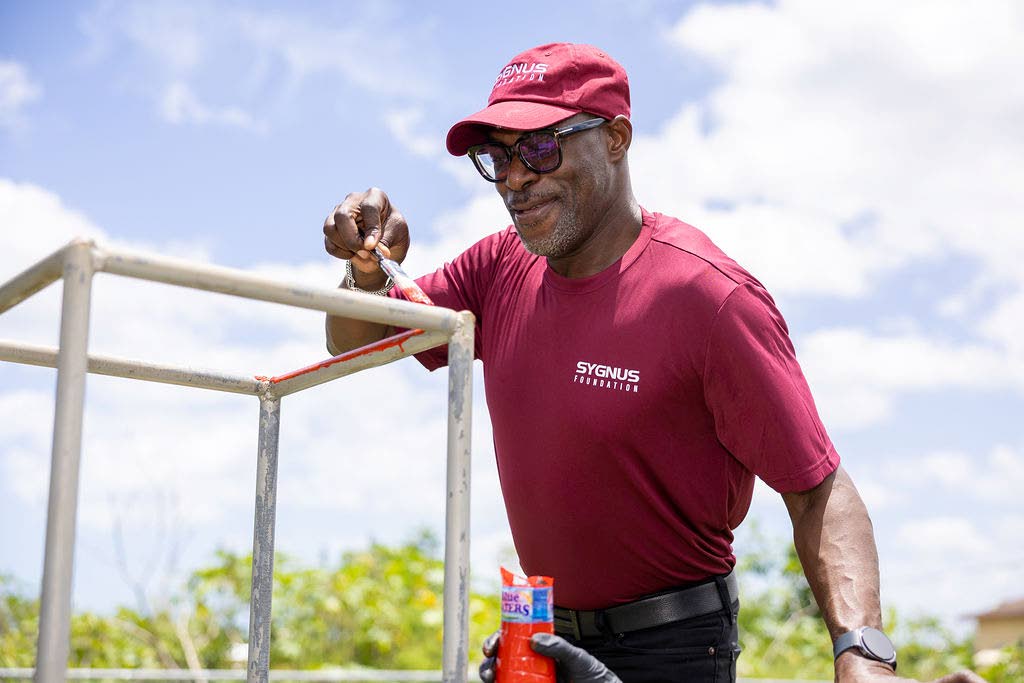
Leading by example, during the official launch of the Sygnus Foundation, president and CEO of Sygnus Capital Berisford Grey helps kick off playground improvement activities at Barbary Hall Primary and Infant School by adding a fresh coat of paint to the monkey bars.x

Leading by example, during the official launch of the Sygnus Foundation, president and CEO of Sygnus Capital Berisford Grey helps kick off playground improvement activities at Barbary Hall Primary and Infant School by adding a fresh coat of paint to the monkey bars.

As part of the day’s activities, Sygnus team members also helped to repaint the school’s playground, bringing new colour and life back into a space. The repainting formed part of the wider effort to refresh and restore the school environment.

The Sygnus CEO said the project represents the latest phase of Sygnus’s Hurricane Rebuild Initiative, launched in the aftermath of Hurricane Melissa.

He noted that with support from several local, regional and international partners, including significant contributions from Bahamas Striping Company and CrossBoundary, the initiative was designed to move beyond emergency relief and invest in the long-term recovery of communities impacted by the storm.

According to Grey the launch of the foundation reflects the company’s desire to create sustainable impact beyond its business operations.

He said the Sygnus Foundation is an initiative that reflects the values that have guided the company’s journey from the beginning — partnership, purpose and nation-building.

“Following Hurricane Melissa we committed not only to helping communities recover, but to supporting their long-term rebuilding and resilience. Today, as we stand at Barbary Hall Primary and Infant School and see students once again learning in restored classrooms, we are witnessing the fulfilment of that promise,” said Grey

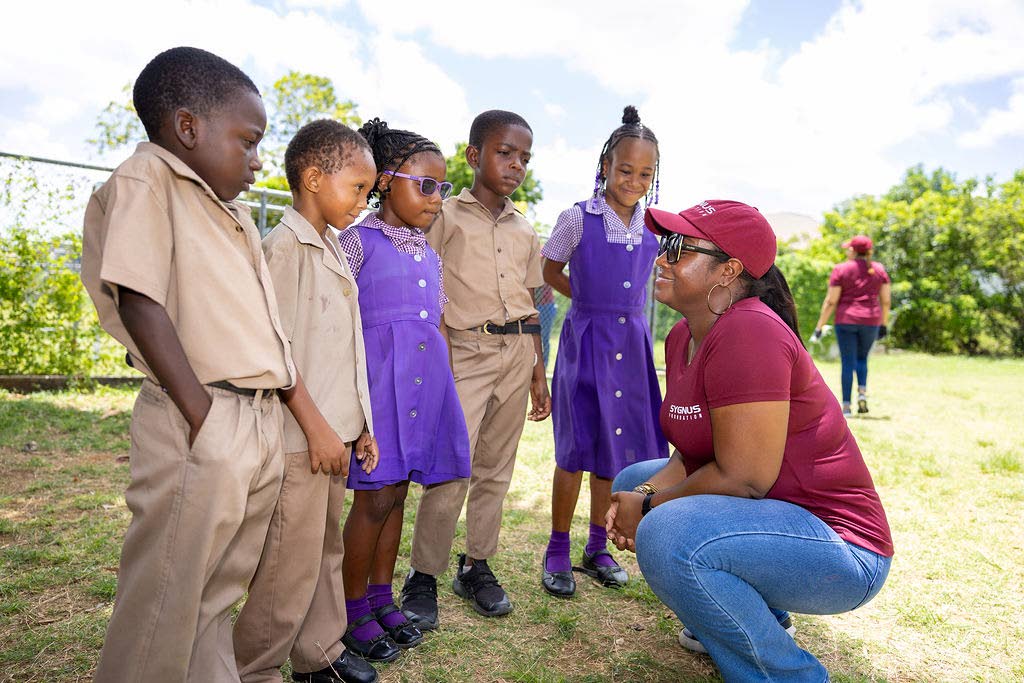
Anadeen Nembhard, vice-president and head of people, culture and talent management at Sygnus Capital, shares a conversation with students of Barbary Hall Primary and Infant School during the foundation’s inaugural community engagement activity.

“This marks not just a milestone for Sygnus, but the beginning of a deeper and more structured approach to social impact across Jamaica,” added Grey.

He pointed out that the launch of the foundation comes during Sygnus’s 10th anniversary month, and signals a strategic expansion of the company’s corporate social responsibility efforts through a dedicated platform focused on creating meaningful and lasting change in communities across Jamaica.

In the meantime, Green commended the partnership and the focus on rebuilding educational infrastructure.

“I want to thank the company for its strong corporate social responsibility and for stepping forward at such a critical time to help our communities and to help our children,” said Green.

“I can’t think of a better way to mark 10 years of innovation, 10 years of creativity, and 10 years of growth than to contribute to a fine educational institution like Barbary Hall. I think this is a brilliant way to start the work of your foundation. It already signals what you are about — driving development; driving growth; helping rural communities to do well; and also stepping forward in times of crisis to ensure that the Government, community, and private sector can work together to shorten the time that we take to recover from these disastrous affairs.

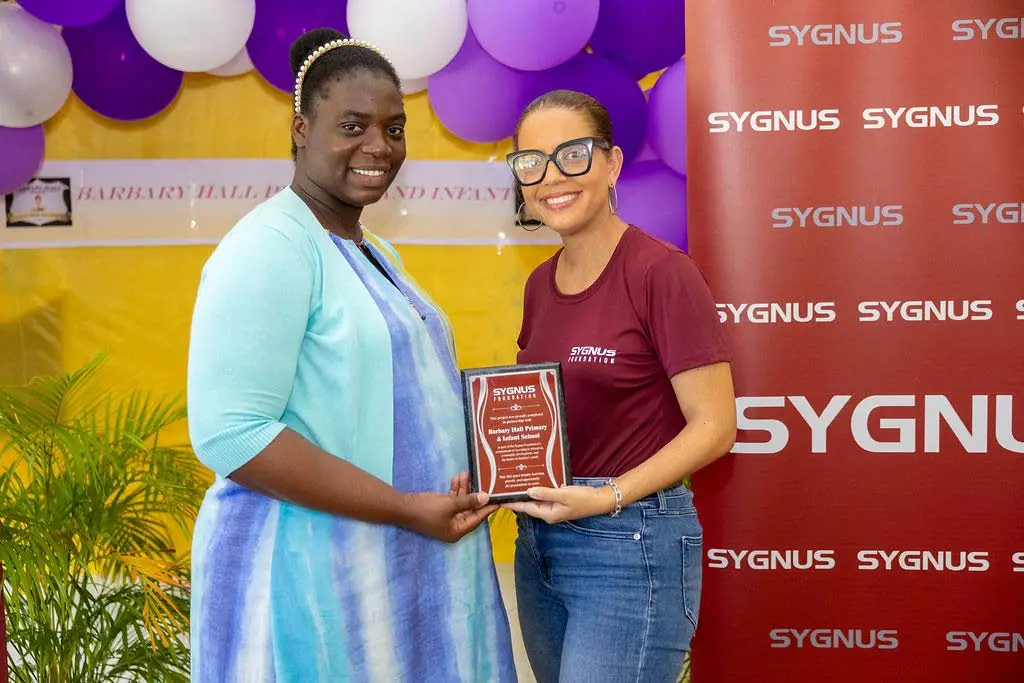
Elizabeth James (right), vice-president and head of wealth and client strategy at Sygnus Capital, presents a commemorative plaque to Barbary Hall Primary and Infant School Principal Mariann Chambers-Smith during the launch of the Sygnus Foundation.x

Elizabeth James (right), vice-president and head of wealth and client strategy at Sygnus Capital, presents a commemorative plaque to Barbary Hall Primary and Infant School Principal Mariann Chambers-Smith during the launch of the Sygnus Foundation.

“Schools are the heartbeat of rural communities, and the outcomes of our children are really based on the strength of the educational institution. Barbary Hall has trained some of the best and brightest across the world, so you are allowing some of the best and brightest to flourish,” added Green.

Acting Principal Mariann Chambers-Smith welcomed the support, noting that the investment will have a transformative impact on the school and its students.

“It is with deep gratitude and a sense of renewed hope that we, the Barbary Hall Primary and Infant School, extend heartfelt thanks to the Sygnus Foundation for its generous support in re-roofing our primary department,” said Chambers-Smith

“Of course, our children this week were privileged to go into their classrooms for the first time after Hurricane Melissa. Because of your support and partnership our students and teachers now have a place of safety and security — and teaching and learning can continue.

“You have not only repaired our roof, but you have also helped us to rebuild our confidence and a sense of stability within our school community. Your contribution will have a lasting impact on this institution,” Chambers-Smith added.


https://www.jamaicaobserver.com/2026/06/24/sygnus-foundation-debuts-16-m-roof-repair-barbary-hall-primary/


d2ce2aaef85395a4c165c9dc20b5fc01.jpg

Climate pitches move into funding talks after Barbados summit

Climate pitches move into funding talks after Barbados summit


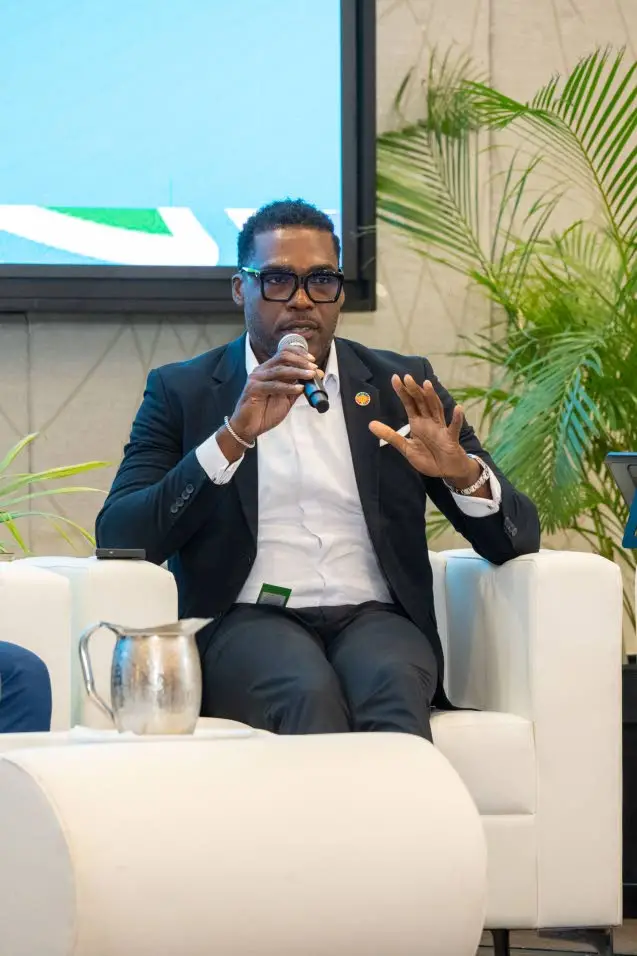
Gregory Samuels, senior VP at Sygnus Capital, says the investment firm is in active discussions regarding several climate-focused ventures following the Climate Smart Summit in Bridgetown, Barbados — including Jamaican projects such as the Kingston Harbour Cleanup initiative and Kee Farms.

MILLIONS of US dollars in climate-focused investment proposals are now moving into active discussions between Caribbean entrepreneurs and financiers following last week’s Climate Smart Summit in Barbados, with several Jamaican projects among those now being tracked for possible funding over the next 18 months.

The investor pipeline includes everything from a US$2.5-million push to expand Kingston Harbour’s clean-up infrastructure to a US$45-million blue economy financing platform being developed by Jamaican entrepreneur Nicholas Kee, alongside regional projects in renewable energy, sustainable tourism and agricultural resilience. Recycling Partners of Jamaica also pitched for just over US$900,000 to support the expansion of its recycling and waste recovery operations in Jamaica.

For the Caribbean Climate-Smart Accelerator, which hosted the summit’s investor forum, the real work starts now.

Over the next 18 months the organisation will track whether the pitches made to financiers such as Sygnus Capital, Caribbean Development Bank, Afreximbank, IDB Invest, and the Development Bank of Latin America and the Caribbean or CAF (formerly Corporación Andina de Fomento), translate into actual deals.

And there is already movement.

Sygnus Capital says it entered the summit with live discussions already under way regarding two of the six projects that formed part of the main investor pitch competition — Barbados-based Rum and Sargassum and GrenadaGrows.

“Two of the six companies we were already in discussion with,” senior vice-president at Sygnus, Gregory Samuels told theJamaica Observerin a follow-up interview.

“These companies are Rum and Sargassum and GrenadaGrows.”

Rum and Sargassum, founded by Barbadian entrepreneur Dr Legena Henry, is developing a waste-to-energy business that aims to convert two major Caribbean waste streams — invasive sargassum seaweed and rum distillery wastewater — into renewable natural gas, tackling both the region’s energy costs and a growing environmental problem.

Meanwhile GrenadaGrows, led by Judlyn Telesford-Checkley, is focused on building a climate-resilient ecotourism and agriculture project in Grenada, combining sustainable construction, food production, and nature-based tourism to create a lower-impact tourism model.

Samuels said Sygnus is also now in discussions involving Jamaican projects including The Kingston Harbour Cleanup initiative and Kee’s proposal.

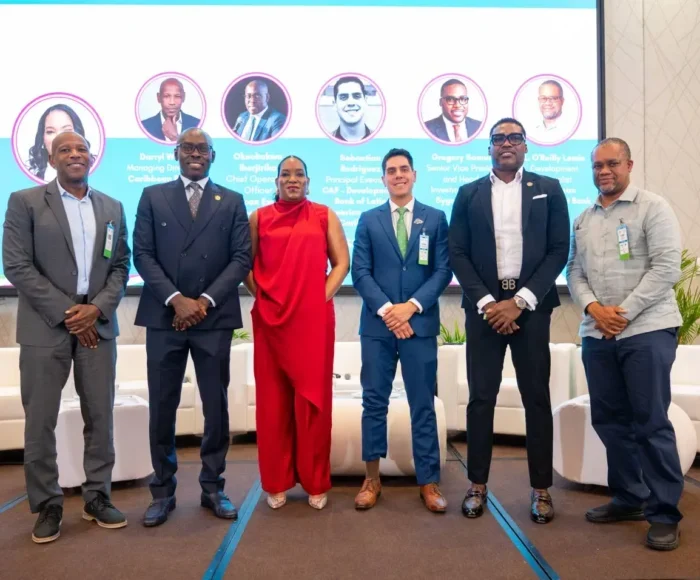
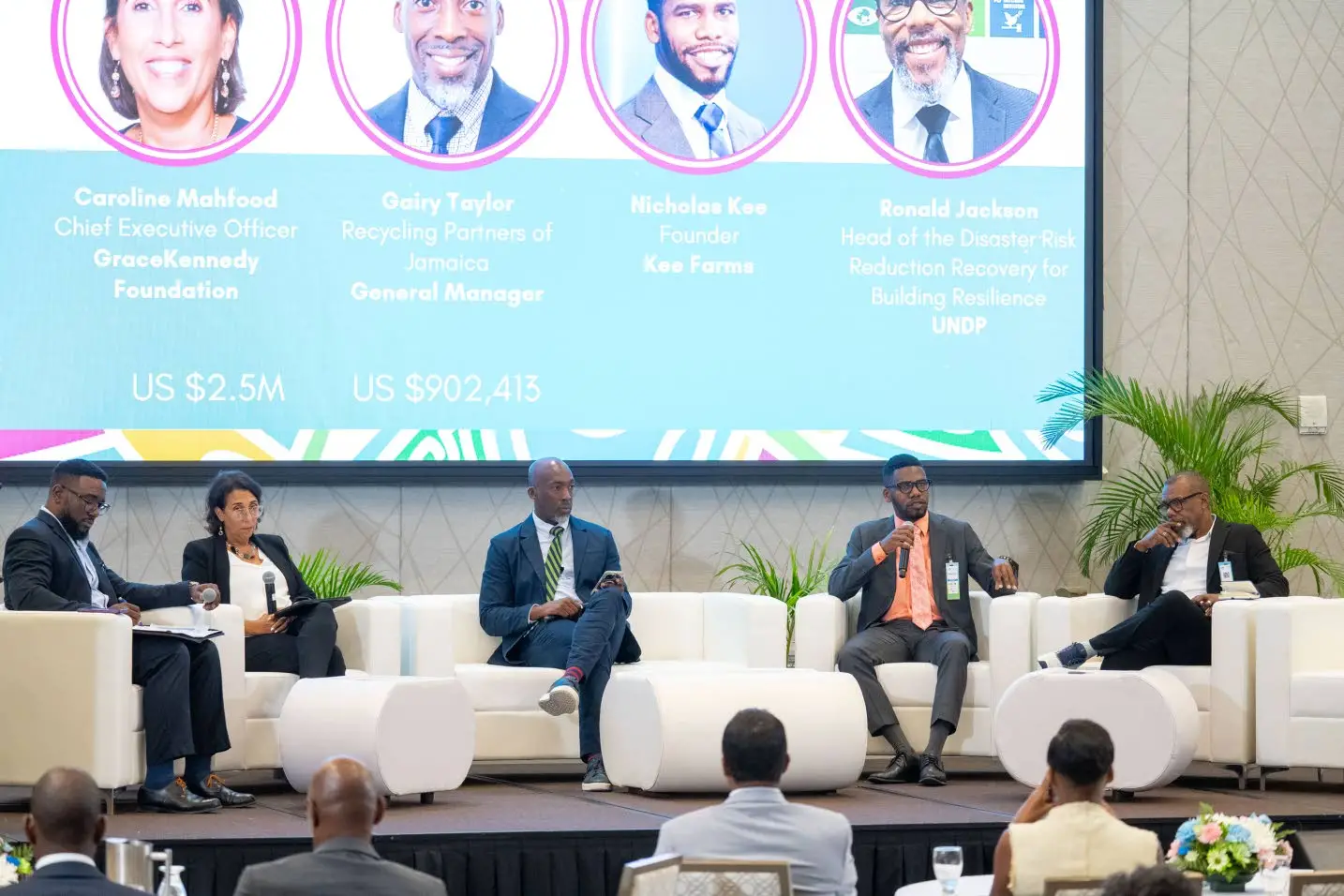
Gerald Lindo (left), director of the Caribbean chapter of the Glasgow Financial Alliance for Net Zero, moderates a discussion on climate finance and investment opportunities featuring Caroline Mahfood of GraceKennedy Foundation; general manager of the Recycling Partners of Jamaica, Gairy Taylor; Nicholas Kee of Kee Farms; and head of Disaster Risk Reduction Recovery for Building Resilience at the UNDP, Ronald Jackson. .

Gerald Lindo (left), director of the Caribbean chapter of the Glasgow Financial Alliance for Net Zero, moderates a discussion on climate finance and investment opportunities featuring Caroline Mahfood of GraceKennedy Foundation; general manager of the Recycling Partners of Jamaica, Gairy Taylor; Nicholas Kee of Kee Farms; and head of Disaster Risk Reduction Recovery for Building Resilience at the UNDP, Ronald Jackson. 

“We definitely believe that a deal is possible and we can do something,” he said.

Sygnus currently manages about US$140 million in climate capital and expects that pool to grow closer to US$180 million by final close.

The fund can deploy between US$500,000 and roughly US$6 million into individual projects using its own capital, while partnering with other lenders for larger raises.

Nicholas Kee is seeking US$45 million to expand Kee Farms, a Jamaican regenerative ocean farming venture that trains artisanal fisherfolk to cultivate seaweed, oysters, and sea cucumbers while restoring marine ecosystems. The capital would support a broader climate finance platform built around blue economy development, biodiversity data, and ecosystem valuation, aimed at helping Jamaica better measure the economic value of its natural assets and the cost of climate damage.

The project drew strong early investor attention.

“Maybe about 10,” Kee said when asked how many parties expressed interest after his pitch.

That does not mean funding is imminent but it does mean the project has moved beyond concept stage into serious capital conversations.

Kee told the Business Observer that the immediate goal is a smaller bridge raise of US$5 million to US$7 million to build the legal and financial structure needed for the larger facility.

“When you’re raising that amount of money, it’s very slow,” he said. “It’s a lot of documentation and preparation.”

At the other end of the spectrum is The Kingston Harbour Cleanup Project. Unlike Kee’s proposal, the GraceKennedy Foundation-led initiative offers no obvious financial return to investors, despite potentially large economic benefits for Jamaica.

That makes it a different kind of funding challenge.

Caroline Mahfood, chief executive officer of the GraceKennedy Foundation, pitched for US$2.5 million to expand interceptor barriers now being used to stop plastic and solid waste from entering Kingston

Harbour through heavily polluted gullies.

Nine barriers have already been installed, but more are needed. Sandy Gully is among the most urgent.

“It’s grant funding that we would go after versus an investor, and the only entity at the summit that we thought might have a grant fund that we could look at was Sygnus…the others were multilateral funders, which wouldn’t work for us,” Mahfood said.

“We [GraceKennedy Foundation and Sygnus] talked about it and he will send me the details of what their grant is. Their maximum amount for a grant is US$500,000. Obviously we need more, but every mickle makes a muckle,” she continued.

Mahfood reasoned that the project should not be viewed as a simple environmental clean-up. “This is not a clean-up project. This is an investment in building resilient infrastructure across Jamaica.”

Cleaner waterways improve flood management, reduce coastal damage, and protect mangroves that serve as natural storm buffers. But even so, Mahfood acknowledges that projects like this sit outside traditional private investment models.

“You’re investing in the country… but you’re not going to put money in and make that money back,” she told the
Jamaica Observer.

Still, the summit generated useful leads. Mahfood said discussions with potential funders, including Sygnus, are continuing.

That broader investor interest comes as financing institutions announced sharp increases in climate capital earmarked for the region.

Afreximbank has raised its Caribbean allocation to US$5 billion from US$1.5 billion. IDB Invest is targeting US$750 million in regional deployment over the next year. CAF has also allocated more than US$800 million for Caribbean operations in 2026, while CDB’s current portfolio stands at US$2.1 billion.


https://www.jamaicaobserver.com/2026/06/24/climate-pitches-move-funding-talks-barbados-summit/