

d2ce2aaef85395a4c165c9dc20b5fc01.jpg

Climate pitches move into funding talks after Barbados summit

Climate pitches move into funding talks after Barbados summit
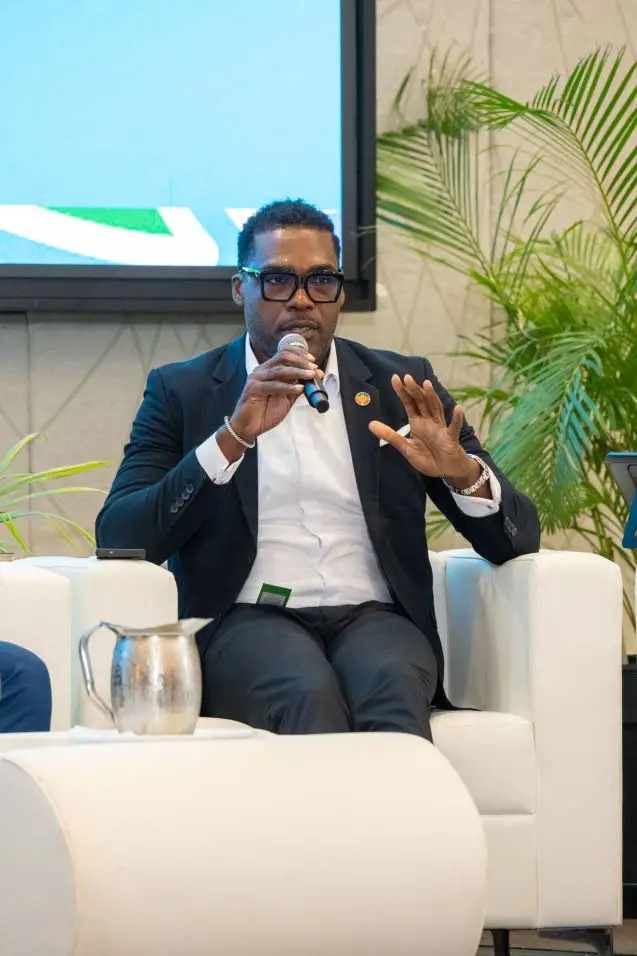
 

Gregory Samuels, senior VP at Sygnus Capital, says the investment firm is in active discussions regarding several climate-focused ventures following the Climate Smart Summit in Bridgetown, Barbados — including Jamaican projects such as the Kingston Harbour Cleanup initiative and Kee Farms.

MILLIONS of US dollars in climate-focused investment proposals are now moving into active discussions between Caribbean entrepreneurs and financiers following last week’s Climate Smart Summit in Barbados, with several Jamaican projects among those now being tracked for possible funding over the next 18 months.

The investor pipeline includes everything from a US$2.5-million push to expand Kingston Harbour’s clean-up infrastructure to a US$45-million blue economy financing platform being developed by Jamaican entrepreneur Nicholas Kee, alongside regional projects in renewable energy, sustainable tourism and agricultural resilience. Recycling Partners of Jamaica also pitched for just over US$900,000 to support the expansion of its recycling and waste recovery operations in Jamaica.

For the Caribbean Climate-Smart Accelerator, which hosted the summit’s investor forum, the real work starts now.

Over the next 18 months the organisation will track whether the pitches made to financiers such as Sygnus Capital, Caribbean Development Bank, Afreximbank, IDB Invest, and the Development Bank of Latin America and the Caribbean or CAF (formerly Corporación Andina de Fomento), translate into actual deals.

And there is already movement.

Sygnus Capital says it entered the summit with live discussions already under way regarding two of the six projects that formed part of the main investor pitch competition — Barbados-based Rum and Sargassum and GrenadaGrows.

“Two of the six companies we were already in discussion with,” senior vice-president at Sygnus, Gregory Samuels told theJamaica Observerin a follow-up interview.

“These companies are Rum and Sargassum and GrenadaGrows.”

Rum and Sargassum, founded by Barbadian entrepreneur Dr Legena Henry, is developing a waste-to-energy business that aims to convert two major Caribbean waste streams — invasive sargassum seaweed and rum distillery wastewater — into renewable natural gas, tackling both the region’s energy costs and a growing environmental problem.

Meanwhile GrenadaGrows, led by Judlyn Telesford-Checkley, is focused on building a climate-resilient ecotourism and agriculture project in Grenada, combining sustainable construction, food production, and nature-based tourism to create a lower-impact tourism model.

Samuels said Sygnus is also now in discussions involving Jamaican projects including The Kingston Harbour Cleanup initiative and Kee’s proposal.

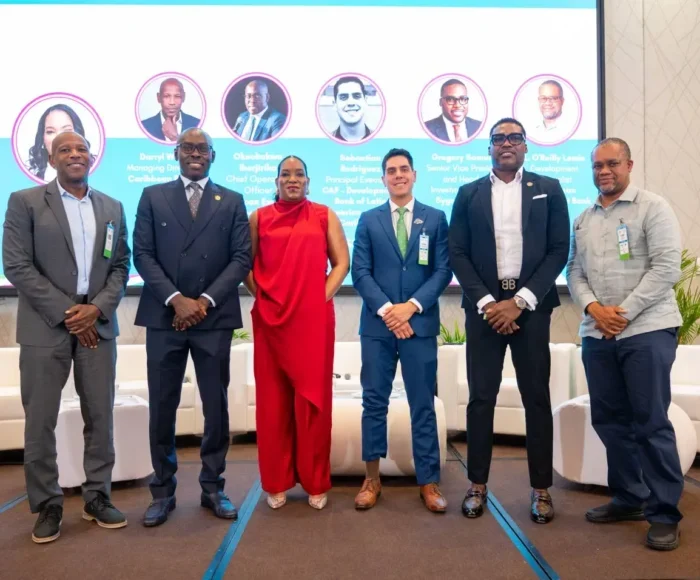
Gerald Lindo (left), director of the Caribbean chapter of the Glasgow Financial Alliance for Net Zero, moderates a discussion on climate finance and investment opportunities featuring Caroline Mahfood of GraceKennedy Foundation; general manager of the Recycling Partners of Jamaica, Gairy Taylor; Nicholas Kee of Kee Farms; and head of Disaster Risk Reduction Recovery for Building Resilience at the UNDP, Ronald Jackson. .

Gerald Lindo (left), director of the Caribbean chapter of the Glasgow Financial Alliance for Net Zero, moderates a discussion on climate finance and investment opportunities featuring Caroline Mahfood of GraceKennedy Foundation; general manager of the Recycling Partners of Jamaica, Gairy Taylor; Nicholas Kee of Kee Farms; and head of Disaster Risk Reduction Recovery for Building Resilience at the UNDP, Ronald Jackson. 

“We definitely believe that a deal is possible and we can do something,” he said.

Sygnus currently manages about US$140 million in climate capital and expects that pool to grow closer to US$180 million by final close.

The fund can deploy between US$500,000 and roughly US$6 million into individual projects using its own capital, while partnering with other lenders for larger raises.

Nicholas Kee is seeking US$45 million to expand Kee Farms, a Jamaican regenerative ocean farming venture that trains artisanal fisherfolk to cultivate seaweed, oysters, and sea cucumbers while restoring marine ecosystems. The capital would support a broader climate finance platform built around blue economy development, biodiversity data, and ecosystem valuation, aimed at helping Jamaica better measure the economic value of its natural assets and the cost of climate damage.

The project drew strong early investor attention.

“Maybe about 10,” Kee said when asked how many parties expressed interest after his pitch.

That does not mean funding is imminent but it does mean the project has moved beyond concept stage into serious capital conversations.

Kee told the Business Observer that the immediate goal is a smaller bridge raise of US$5 million to US$7 million to build the legal and financial structure needed for the larger facility.

“When you’re raising that amount of money, it’s very slow,” he said. “It’s a lot of documentation and preparation.”

At the other end of the spectrum is The Kingston Harbour Cleanup Project. Unlike Kee’s proposal, the GraceKennedy Foundation-led initiative offers no obvious financial return to investors, despite potentially large economic benefits for Jamaica.

That makes it a different kind of funding challenge.

Caroline Mahfood, chief executive officer of the GraceKennedy Foundation, pitched for US$2.5 million to expand interceptor barriers now being used to stop plastic and solid waste from entering Kingston

Harbour through heavily polluted gullies.

Nine barriers have already been installed, but more are needed. Sandy Gully is among the most urgent.

“It’s grant funding that we would go after versus an investor, and the only entity at the summit that we thought might have a grant fund that we could look at was Sygnus…the others were multilateral funders, which wouldn’t work for us,” Mahfood said.

“We [GraceKennedy Foundation and Sygnus] talked about it and he will send me the details of what their grant is. Their maximum amount for a grant is US$500,000. Obviously we need more, but every mickle makes a muckle,” she continued.

Mahfood reasoned that the project should not be viewed as a simple environmental clean-up. “This is not a clean-up project. This is an investment in building resilient infrastructure across Jamaica.”

Cleaner waterways improve flood management, reduce coastal damage, and protect mangroves that serve as natural storm buffers. But even so, Mahfood acknowledges that projects like this sit outside traditional private investment models.

“You’re investing in the country… but you’re not going to put money in and make that money back,” she told the
Jamaica Observer.

Still, the summit generated useful leads. Mahfood said discussions with potential funders, including Sygnus, are continuing.

That broader investor interest comes as financing institutions announced sharp increases in climate capital earmarked for the region.

Afreximbank has raised its Caribbean allocation to US$5 billion from US$1.5 billion. IDB Invest is targeting US$750 million in regional deployment over the next year. CAF has also allocated more than US$800 million for Caribbean operations in 2026, while CDB’s current portfolio stands at US$2.1 billion.


https://www.jamaicaobserver.com/2026/06/24/climate-pitches-move-funding-talks-barbados-summit/
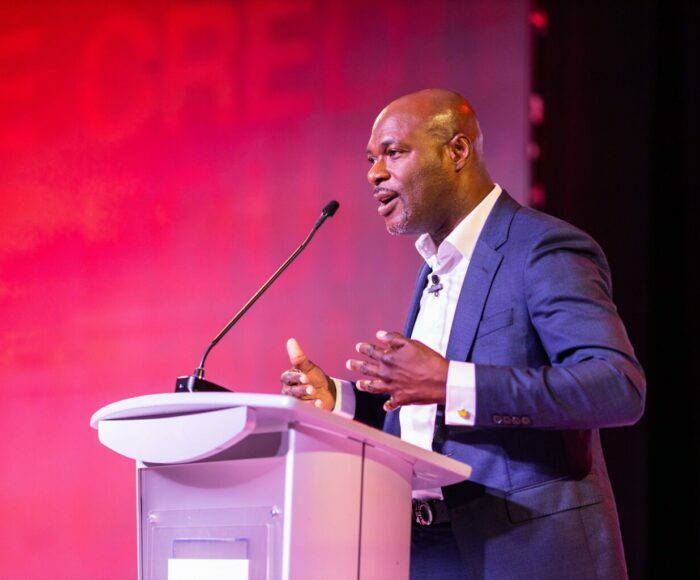
Image-2-Berisford-Grey-CEO-and-President-Sygnus-1536×1024

Inside the financial system: Key lessons from Damani Reid on careers, capital, and private credit

IFC finalizes  US$15-million investment in Caribbean debt fund targeting SME financing 


Berisford Grey, co-founder, president and CEO of Sygnus

The private-sector financing arm of the World Bank, the International Finance Corporation (IFC) has confirmed plans to invest US$15 million in a regional fund arranged by Sygnus Capital. 

It marks the World Bank Group’s first debt fund transaction in the region, the IFC indicated Friday. The investment in the Caribbean Community (CARICOM) Resilience Fund (CCRF) Debt Sub-Fund had been disclosed as pending in November 2025. It is now confirmed, with the IFC detailing a split structure: Up to US$5 million in a senior tranche and up to US$10 million in a mezzanine tranche.

“Innovative vehicles like the CCRF Debt Sub-Fund deliver customised financing solutions that enable medium-sized enterprises to operate effectively, expand, and generate employment,” stated Elizabeth Martinez de Marcano, IFC division director for the Andean Countries and the Caribbean.

Ultimately, the debt sub-fund is targeting US$75 million, with the option to scale up to US$125 million.

“Building a more resilient and sustainable Caribbean is central to Sygnus’ mission, and IFC’s investment represents a significant milestone for both the CCRF platform and the region,” said Berisford Grey, co-founder, president and CEO of Sygnus.

Under its allocation framework, up to 70 per cent of capital committed will go toward on-lending to medium-sized enterprises, with the remaining 30 per cent directed to resilience and sustainability projects, including infrastructure.

Financing will be deployed across 13 countries: Antigua and Barbuda, The Bahamas, Barbados, Belize, Dominica, Grenada, Guyana, Jamaica, St Kitts and Nevis, St Lucia, St Vincent and the Grenadines, Suriname, and Trinidad and Tobago, spanning seven priority sectors — energy, water, agriculture, housing, transportation, financial services, and information and communications technology.

The IFC framed the investment against a backdrop of acute financing constraints across the region. Domestic credit in Caribbean small states stands at just 32.8 per cent of GDP, while the financing gap for the region’s businesses exceeds US$22 billion, the corporation said.

The announcement also cited the toll of Hurricane Melissa, the category-5 storm that caused significant damage across Jamaica, The Bahamas and Dominica in 2025, as underscoring the urgency of resilient infrastructure investment.

The debt sub-fund is part of the broader CCRF platform, a 10-year vehicle launched in January 2024 with the CARICOM Development Fund as anchor investor and first-loss capital provider. 

In its 2025 fiscal year, the IFC committed a record US$71.7 billion globally to private companies and financial institutions in developing countries.


https://jamaica-gleaner.com/article/business/20260614/ifc-finalises-us15-million-investment-caribbean-debt-fund-targeting-sme

a682ab603a29c51b37dba0bb8256d1a2.jpg

Inside the financial system: Key lessons from Damani Reid on careers, capital, and private credit

Inside the financial system: Key lessons from Damani Reid on careers, capital, and private credit


Damani Reid, manager, investment management at Sygnus Capital, engaged students during a presentation to The UWI Banking League during which he broke down key insights on private credit, investment management, and careers in finance.

In a recent session with the University of the West Indies (UWI) Banking League Club, Damani Reid, manager, investment management at Sygnus Capital, broke down how capital actually moves through the financial system and why alternative sources of funding are becoming increasingly important in today’s economy.

Speaking directly to students, he unpacked key themes across private credit, investment execution, and career pathways in finance, translating complex industry dynamics into practical insights for the next generation of professionals.

At the centre of his message was a clear shift taking place in global markets: As traditional lenders become more cautious in periods of uncertainty, alternative investment firms are playing a growing role in supporting business continuity and economic resilience.

Below are the key insights shared during the session:

One of the first points highlighted was that the financial services industry extends far beyond traditional job titles.

Reid outlined the range of roles available across banking, investment management, and advisory services, encouraging students to look beyond surface-level definitions of “finance careers” and instead understand how different functions contribute to the movement of capital.

He also noted that employers are increasingly focused on candidates who demonstrate curiosity, discipline, and an understanding of how the industry operates in practice, not just academic performance.

Success in finance is driven by mindset, not just technical ability

While technical knowledge remains important, Reid emphasised that long-term success in the industry is heavily influenced by mindset.

He encouraged students to develop consistency, adaptability, and a willingness to continuously learn in a fast-changing environment. “Firms are looking for individuals who are curious, disciplined, and willing to understand how the industry works in practice.”

Understanding personal finance and markets early matters

The session also touched on foundational investing concepts, including the importance of building strong personal finance habits early.

Reid encouraged students to begin thinking about how capital is allocated across both local and international markets, helping them develop a more rounded understanding of how financial systems operate.

This early exposure, he noted, strengthens decision-making and builds long-term financial awareness.

Private credit plays a critical role in economic stability

A key focus of the discussion was the role of alternative investments, particularly private credit, in supporting businesses during periods of economic uncertainty.

Damani Reid addresses members of The UWI Banking League, sharing practical guidance on career pathways in finance and the skills required to succeed in the evolving financial services industry..

Damani Reid addresses members of The UWI Banking League, sharing practical guidance on career pathways in finance and the skills required to succeed in the evolving financial services industry.


Reid explained that when traditional banks become more conservative in their lending, funding gaps emerge for otherwise viable businesses.

“Traditional banking institutions play a critical role but in periods of uncertainty they often become more conservative in their lending. That creates a gap, one that alternative investment firms are uniquely positioned to fill,” Reid explained.

He emphasised that private credit is increasingly helping to bridge this gap by providing flexible, tailored financing solutions that support business continuity. “Private credit is not just about deploying capital. It’s about structuring solutions that align with the realities of the business.”


How investment decisions are executed in practice

Students were also taken through the end-to-end investment process, offering a practical view of how deals move from concept to execution.

This included:

• Identifying and onboarding clients

•Structuring tailored financial solutions

•Deploying capital

•Actively managing investments over time.

Reid highlighted that investment management is a continuous process rather than a one-time transaction. “Investment management is not a passive exercise. It requires continuous engagement, understanding the business, adapting to changing conditions, and ensuring that capital is being used effectively.”

Alternative investments are becoming a core part of the financial system

The session concluded with a broader reflection on the evolution of the industry.

Reid noted that alternative investments are no longer a niche segment but an increasingly important complement to traditional banking systems.

As financial conditions continue to evolve, these structures are playing a greater role in supporting business activity and economic resilience.

For students considering a career in finance, the message was clear: Success requires more than technical knowledge. It requires a strong understanding of how capital flows through the economy, how investment decisions are made, and how different parts of the financial system interact in real time.


https://www.jamaicaobserver.com/2026/06/07/inside-financial-system-key-lessons-damani-reid-careers-capital-private-credit/

Screenshot 2026-06-15 154102

Justine Powell | The Caribbean’s most undervalued asset

Justine Powell | The Caribbean’s most undervalued asset


Justine Powell, Vice President of Investment Management at Sygnus Capital Limited

One of the most interesting parts of managing a portfolio is seeing what people choose to value. Every week, investors devote significant time and resources to understanding assets that can be measured, modelled and monetised. Buildings, infrastructure, equipment and cash flows are dissected and debated, as investment decisions hinge on small changes in assumptions.

Across the region, billions are allocated based on what assets are worth today and what they may be worth tomorrow. Yet one of the Caribbean’s most important infrastructure assets rarely appears in these conversations. It is not owned by any company, does not sit on balance sheets, and is often only noticed when it is already degraded.

If this were a highway, port, airport, or power plant, the consequences would be obvious and the response immediate. But it is not. The Caribbean’s most undervalued infrastructure asset is nature.

Few would dispute the importance of coral reefs, mangroves, and watersheds to life and livelihoods across the region. Mangroves reduce storm surge impacts, coral reefs act as natural breakwaters, and watersheds regulate water supply and reduce flood risk. These ecosystems also underpin tourism, fisheries, and broader economic activity.

Yet they are still largely treated as environmental concerns rather than productive infrastructure. That distinction matters. When we fail to recognise nature as infrastructure, we systematically underinvest in its maintenance.

Across the Caribbean, governments and investors are already spending heavily on resilience. Roads are being redesigned, ports upgraded, energy systems modernised and seawalls constructed. These investments are necessary, but they also expose a gap in how resilience is defined.

We would never allow a major highway to deteriorate without maintenance and ignore the economic consequences. Yet a similar pattern occurs with reefs, wetlands and watersheds. Their decline is gradual, their value underestimated, and the cost becomes visible only after a disaster.

Unlike traditional infrastructure, failures in natural systems are not always immediately visible. A damaged road is obvious. A degraded watershed is not, until water becomes scarce, treatment costs rise, or agricultural output falls.

Damaged coral reefs may appear environmental, but their decline increases coastal erosion, weakens tourism competitiveness and raises storm-related losses. Over time, these effects show up in insurance claims, public finances and investment returns.

In this sense, nature is not just an environmental issue. It is increasingly a financial one. Markets are effective at pricing assets that generate revenue, but far less effective at pricing assets that prevent losses. This helps explain why natural capital remains undervalued. Its value lies in avoided costs and reduced risk,  benefits that are real but harder to measure.

Over the past decade, climate risk has become more visible in financial decision-making. Hurricanes, floods and droughts are now routinely assessed. However, these risks are amplified when natural systems are weakened.

A hurricane hitting a coastline protected by mangroves and reefs does not produce the same outcome as one striking a degraded shoreline. The event may be identical, but the losses are not. This raises a key question: are we accurately pricing environmental degradation into long-term risk?

History suggests markets struggle with slow-moving risks. The global financial crisis showed how vulnerabilities can build unnoticed until they become systemic. Environmental degradation in the Caribbean shares similar traits:  gradual, interconnected and increasingly material.

For institutional investors, this has clear implications. Pension funds, insurers and asset managers are exposed to ecosystems whether they recognise it or not. Coastal real estate, tourism, agriculture and infrastructure all depend on environmental stability.

If capital is truly long-term, ecosystem health cannot be peripheral; it must be central to assessing resilience. For development finance institutions, resilience cannot rely solely on engineered solutions. Natural and built infrastructure must be strengthened together.

For businesses, environmental stewardship is increasingly linked to continuity, risk management and long-term value creation. The Caribbean has often responded to environmental shocks after they occur. The opportunity now is to become more proactive, recognising that protecting natural systems is also about safeguarding economic competitiveness.

 Yesterday was World Environment Day and  we are reminded to rethink what we define as infrastructure. We would never allow a major highway to deteriorate without maintenance and ignore the economic consequences. Yet we allow similar degradation of natural systems whose economic role is just as critical.

When mangroves protect coastlines, reefs reduce storm damage, or watersheds secure water supply, they are performing infrastructure functions no less important than roads or ports.

The question is not whether nature has economic value. The evidence is clear that it does. The real question is whether our investment systems, policies and decisions have fully caught up.

As investors, we are trained to identify undervalued assets. The Caribbean’s natural capital may be among the most undervalued of all, not because its importance is unknown, but because its value has not yet been fully accounted for. Recognising nature as infrastructure is the foundation for investing in resilience before the cost of inaction becomes unavoidable.

Justine Powell is the Vice President of Investment Management at Sygnus Capital Limited. Sygnus Capital Limited is the leading alternative investment manager in the Caribbean with over US$700 million in assets under management.


https://our.today/justine-powell-the-caribbeans-most-undervalued-asset/

image_1-322.jpg

Corporate moms talk family & balance

Sygnus Credit Investments Limited (SCI) will be turning deeper focus on impact investing going forward as it looks to have a greater social impact in the region while growing its private credit portfolio.

GA

Financing resilience

Sygnus Credit Investments Limited (SCI) will be turning deeper focus on impact investing going forward as it looks to have a greater social impact in the region while growing its private credit portfolio.

SYGNUS-7

Sygnus brings stories, learning, and impact to life on Read Across Jamaica Day

Sygnus Credit Investments Limited (SCI) will be turning deeper focus on impact investing going forward as it looks to have a greater social impact in the region while growing its private credit portfolio.

IMG_1532-1024×683

Sygnus Real Estate Finance seeks to assure shareholders

Sygnus Credit Investments Limited (SCI) will be turning deeper focus on impact investing going forward as it looks to have a greater social impact in the region while growing its private credit portfolio.

391e5ccbbc5cfdba2fdeec3fb1934d43 copy

When climate risk becomes financial risk

Sygnus Credit Investments Limited (SCI) will be turning deeper focus on impact investing going forward as it looks to have a greater social impact in the region while growing its private credit portfolio.

57b3e4ae772c27309ca8c3864ad62800.jpg

When climate risk becomes financial risk

Sygnus Credit Investments Limited (SCI) will be turning deeper focus on impact investing going forward as it looks to have a greater social impact in the region while growing its private credit portfolio.