Sygnus at 10
Building capital beyond the banks

MORRIS…launching a private credit business, we knew it was going to be a huge educational exercise — teach the market, so to speak. Because if you recall, prior to that, there used to be ponzi schemes that were called alternative investments. And so we couldn’t even use the word alternative.
In the Caribbean, alternative investments or money invested in businesses and projects outside traditional bank loans or stock market funding, barely register.
Even in Jamaica, home to one of the region’s deepest capital markets, the asset class accounts for just a sliver of economic output — well under one per cent of GDP by Sygnus Capital’s estimates.
“It’s still very small. It’s probably less than, certainly it’s less than one per cent. It’s more like 0.05 per cent or thereabout relative to the GDP across the region,” CEO of Sygnus Capital Limited and co-founder of Sygnus Group, Berisford Grey told the Jamaica Observer.
In the United States and other developed markets that figure can run as high as seven to 10 per cent.
In other words, the Caribbean is still playing catch-up. Businesses with viable expansion plans can spend years stuck in a financing no-man’s-land — too complex for traditional bank lending, but not yet suited for public markets. Sygnus Capital turned that gap into a business.
“Even if we should push aggressively over the next decade and get the alternative markets to expand in terms of new asset classes, infrastructure, energy, funds etc, we might just get to three or four per cent of GDP, which would mean that we’d still have a ways to go,” he added, broadening the lens beyond Sygnus to the structural evolution of the Caribbean capital markets.
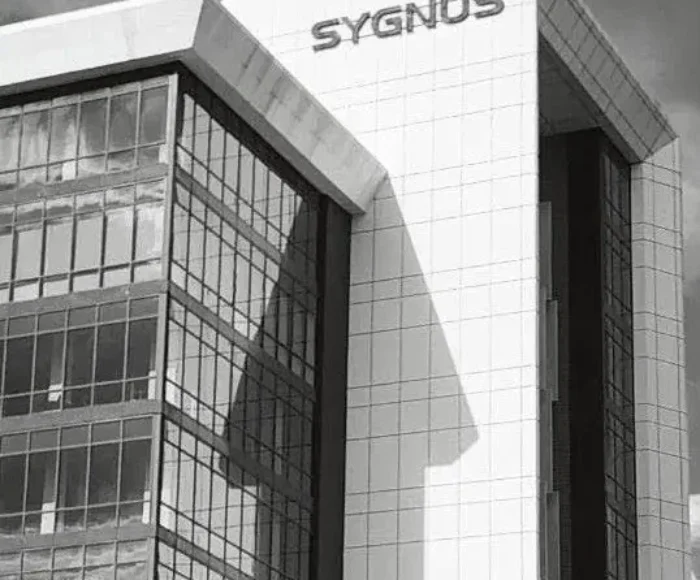
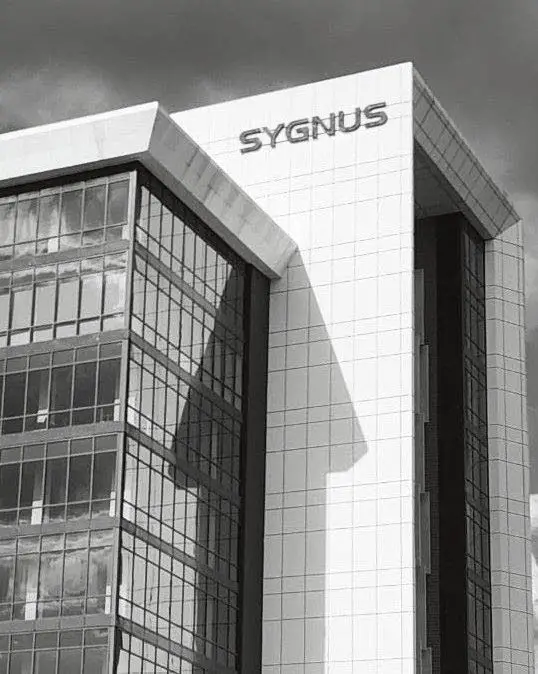
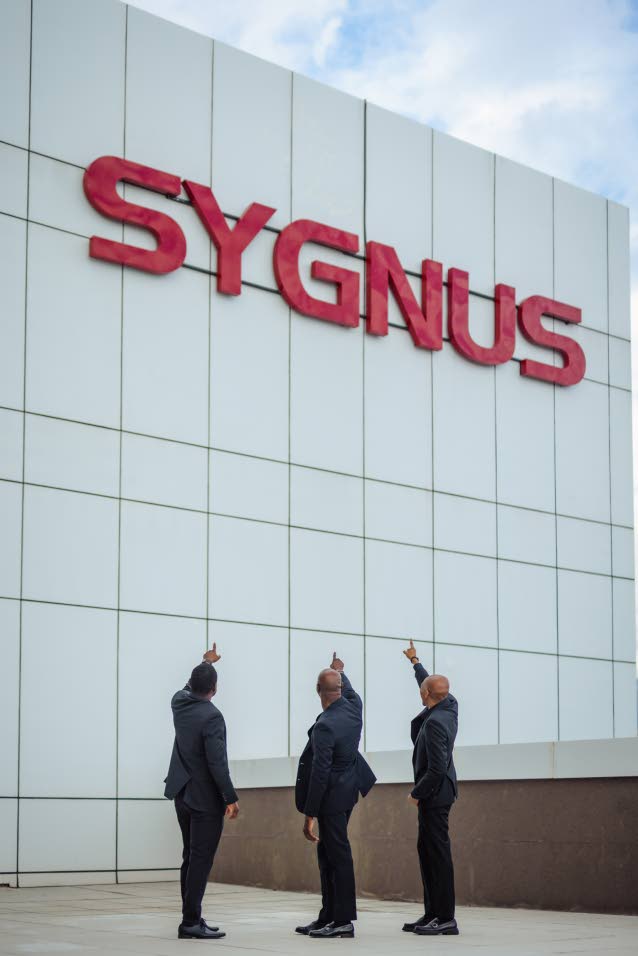
On the seventh floor of One Belmont — the sleek Kingston office tower Sygnus built during the pandemic — the company’s three founders sat in a bright red sectional couch reflecting on a decade of building one of the Caribbean’s most ambitious private capital platforms.
Grey spoke like a strategist, constantly returning to scale and long-term opportunity. Dr Ike Johnson broke down complex structures with almost surgical precision. Jason Morris was more blunt, cutting through financial jargon in a few words.
His simplest line may have best explained the entire business.
“You can get bank financing all day, every day,” Morris, executive VP and chief investment officer at Sygnus Group, said. Then he paused.
“The problem is flexibility…Flexible capital that meets the entrepreneur in their space and is designed to do exactly what they are trying to do, it’s very, very difficult to come by.”
That, more than anything else, is the gap Sygnus has spent the last 10 years trying to fill.
Founded in 2016 by Grey, Johnson and Morris, Sygnus was built around a problem the trio had seen repeatedly during their years in banking and finance.
Medium-size businesses — often profitable, often growing — were struggling to access capital. Not because they were bad businesses but often they simply needed money structured differently.
That is where Sygnus stepped in.
To understand the firm’s rise it helps to first understand what Sygnus is — and what it is not.
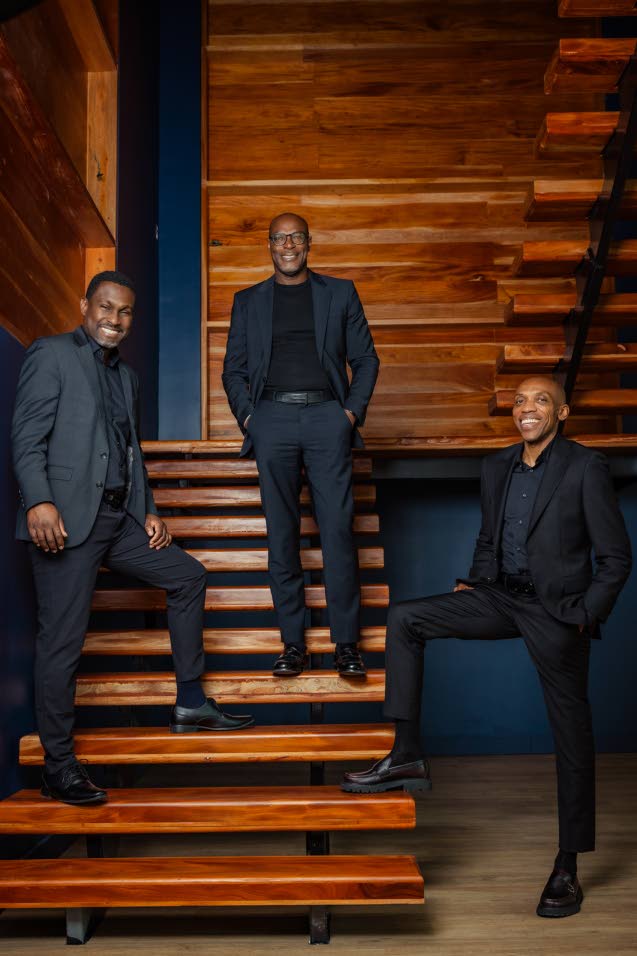
Sygnus Group founders (from left) Dr Ike Johnson, Berisford Grey and Jason Morris in discussion at the company’s One Belmont offices in Kingston as the alternative investment firm marks its 10th anniversary. (Photo: Joseph Wellington)
It is not a bank. It is not simply a lender either, despite how it is often described.
At the centre sits Sygnus Capital Limited, a licensed securities dealer and investment manager that structures deals, raises capital, and manages specialised investment vehicles.
Those vehicles include Sygnus Credit Investments, or SCI, which provides private credit to middle-market businesses; Sygnus Real Estate Finance, or SRF, which deploys flexible capital into commercial, residential and hospitality developments; Sygnus Deneb Investments, its private equity platform; and the Caribbean Community Resilience Fund, which targets climate and resilience-related investments.
Together, those entities allow Sygnus to deploy capital across multiple layers of the financing stack — debt, equity and hybrid structures — depending on what a business or project actually needs.
The model may sound straightforward today but convincing investors a decade ago to throw support behind not just a new company, but an entirely new business model, was far from easy.
“Launching a private credit business, we knew it was going to be a huge educational exercise —teach the market, so to speak. Because if you recall, prior to that there used to be Ponzi schemes that were called alternative investments, and so we couldn’t even use the word alternative,” Morris told the Sunday Finance.
“Non-traditional investments [was the term used instead]. That’s how we started, and then we slowly, but surely, we had to introduce different terminology to the market. For example, dry powder. Nobody in the market knew about it, and we introduced it…and now, everybody knows what it means,” he continued.
The founders’ credibility and portfolio of work over the years helped. The three had built strong reputations at major financial institutions, with Morris coming from Scotiabank, Grey from CIBC FirstCaribbean, and Johnson from JMMB Group.
“We had a good track record of doing stuff on big platforms but the question was whether we could do it on our own,” Morris said.
“That was a big, big challenge. And what this required was for us to get a few of what I’m going to term anchor investors — investors who would put a large amount of money — and then we used those investors to attract other investors,” he said.
But governance also played a central role in winning that trust.
Institutional investors, Grey noted, were not simply buying into returns projections. They were assessing whether Sygnus had built the kind of independent governance and risk controls capable of managing institutional capital.
That discipline, he said, was embedded in the company’s business model from day one and helped give early investors confidence to commit.
“When we look back at our business plan, and we always laugh about this, our business plan actually had the blueprint. I’m always surprised at the amount of work we did pre the launch of Sygnus,” Grey said.
“We did probably two and a half years of work… In the moment, it’s all fun but when you look back at the documentations, the amount of work that we did to take advantage of the opportunities that came up…” he continued.
With early capital secured and institutional support in place, Sygnus moved quickly from concept to execution. What began as a seven-person start-up soon evolved into a regional investment platform, launching new business lines and deploying capital into opportunities not just in Jamaica, but across the Caribbean.
Sygnus Group founders (from left) Dr Ike Johnson, executive vice-president and chief operating officer; Berisford Grey, chief executive officer of Sygnus Capital; and Jason Morris, executive vice-president and chief investment officer, at the company’s office in Kingston. The alternative investment firm is marking 10 years of operations this year.
The expansion was deliberate, but ambitious.
In 2017, just a year after launch, Sygnus rolled out Sygnus Credit Investments (SCI), giving investors exposure to private credit and providing medium-size businesses with access to financing, often unavailable through traditional channels. Two years later came Sygnus Real Estate Finance (SRF), expanding the group’s reach into commercial, residential and hospitality developments. Private equity followed through Deneb Investments, widening the firm’s ability to back businesses with long-term growth potential.
In 2022, the group deepened its regional footprint with the acquisition of Puerto Rico-based Acrecent Financial, later rebranded as Sygnus Capital PR, giving it a foothold in private credit, receivables financing, wealth management and corporate advisory services.
Over time, the company’s investment footprint expanded across sectors ranging from real etate and tourism to energy, infrastructure, and financial services.
Today, Sygnus operates across Jamaica, Puerto Rico, St Lucia and the United States, with more than US$700 million deployed in alternative investments. Its team currently stands at roughly 100 people.
Morris points to Bahamas Striping, a Bahamas-based road-marking and infrastructure company, as one example of how Sygnus’s investment model works in practice.
Sygnus funded the company at a stage when larger pools of institutional capital were not yet within reach. That early support helped position the business for significantly larger financing down the line.
Last year, Bahamas Striping secured US$100 million in capital from Afreximbank — a milestone Morris said validated Sygnus’s ability to identify scalable businesses early and help prepare them for institutional funding.
“Just think about the magnitude and scale of that,” he said. “Without Sygnus Credit Investments believing in those entrepreneurs and supporting them by channelling SCI’s pension fund investor capital into that business, that company would not have been in a position to unlock US$100 million in capital.”
Executive Vice-President and Chief Operating Officer Dr Ike Johnson told the Jamaica Observer that such progression speaks to one of Sygnus’s less-visible contributions: The firm does more than inject capital — it helps businesses build the operational discipline needed to scale.
While Sygnus operates outside traditional lending channels, Johnson said its standards around governance, reporting, and capital deployment remain deliberately rigorous.
“When companies accept investment from us there are certain expectations around how they report to us, how they deploy that capital, and what our expectations are around returns,” Johnson said.
Over time, he said, that discipline often leaves businesses stronger, better managed, and ultimately more attractive to traditional lenders.
Eyes on the next decade
Looking ahead, the founders see no shortage of opportunity.
Johnson pointed to Sygnus Deneb Investments, the group’s private equity arm, as one of its strongest-performing business lines, with roughly US$50 million already deployed into growth-stage businesses across the region.
The Sygnus founding trio at the company’s headquarters in Kingston. Over the past decade the firm has deployed more than US$700 million in alternative investments across the Caribbean and international markets.
The firm is seeing particularly strong opportunities in distribution, hospitality, and businesses that support the Caribbean’s tourism-dependent economies.
Climate finance is another area the founders believe could define Sygnus’s next decade.
The scale of the opportunity is massive.
Morris estimates the Caribbean requires roughly US$100 billion in climate- and resilience-related investments annually just to begin addressing the region’s vulnerability to hurricanes, energy insecurity and food shocks.
Through the Caribbean Community Resilience Fund (CCRF), Sygnus is targeting investments in solar energy, electric mobility, agriculture and food security — sectors where the firm believes commercial returns and developmental impact can increasingly co-exist.
“Where the CCRF is playing is where we generate returns,” Morris said. “As an equity investor we expect returns of between 14 and 18 per cent in US dollars, depending on how transactions are structured. If we are doing debt transactions those returns would be lower — typically in the double digits and in some cases even single digits.”
Still, the founders are under no illusion about the risks ahead.
For a business built on deploying capital into complex transactions, macroeconomic instability remains a constant concern. High interest rates, inflation, geopolitical conflict, and climate shocks all have the potential to affect portfolio companies and investor behaviour.
Johnson said that after decades in banking and finance, he has learned that disruption is inevitable.
“In my entire career in banking and finance there’s always something going on,” he said. “Whether it’s war, a hurricane, or another COVID-type event, you have to build a platform that is nimble and has a team of problem-solvers who can respond quickly.”
That resilience, he said, is critical not just for the Sygnus Group of companies but for the businesses it supports, particularly during periods of stress.
Grey agreed, noting that while the company closely monitors macroeconomic risks, those challenges are part of operating in financial markets.
“Preparation is the mother of victory…Whatever the state of nature may be, we have to understand the risks within that scenario and manage around them,” Grey said.
Even so, he remains optimistic about what lies ahead.
For all the growth Sygnus has achieved over the past decade he believes the Caribbean’s alternative investment market is still in its infancy.
And if he is right, Sygnus’s first decade may ultimately be remembered not as the peak of its story but as the foundation for what comes next.
https://www.jamaicaobserver.com/2026/06/28/sygnus-at-10/