Nadyanil Article

Private Credit: What It Is and When to Use It for Your Business

Private Credit: What It Is and When to Use It for Your Business

While banks remain essential to our economy, other sources of capital are now available to complement traditional lending, explains Nadyanil Marrero.

October 25, 2026 – 10:30 p.m.

By: Nadyanil Marrero- Business Development Manager


How is the way businesses and developers access capital changing? For years, obtaining financing primarily meant turning to a bank. While banks remain essential to our economy, today there are other sources of capital that can complement traditional loans and address different business needs.

In Puerto Rico, these alternatives are becoming increasingly relevant as investment opportunities emerge. According to the Puerto Rico Planning Board, private investment in construction reached an estimated $4.1 billion in fiscal year 2025, a 5.6% increase over the previous year. Behind this activity are projects with different capital requirements and development timelines.

One of the available alternatives is private credit.

In simple terms, private credit is financing provided by non-bank institutions, such as investment funds, that work directly with businesses and developers to structure loans based on the characteristics of each transaction.

Why has private credit gained ground? Primarily because of its flexibility.

A developer may need capital to acquire a property, while a growing company may be looking for resources to expand its operations. In both cases, having financing options that align with their goals and timelines can make a difference.

Private credit allows each project to be evaluated individually, considering factors such as cash flow, collateral, repayment capacity and the business plan to establish terms that meet its specific needs.

There are several financing structures worth understanding. Senior loans have priority for repayment and are generally backed by assets. Mezzanine financing complements other sources of capital, sitting between senior debt and equity.

Bridge loans provide short-term financing while a permanent solution is being arranged, for example, to acquire a property. Meanwhile, interim construction loans cover costs during the development of housing projects, hotels or industrial facilities and are generally repaid or replaced once construction is completed.

So, when might private credit be a good option?

It depends on the purpose of the financing, the timeline, cash flow and available collateral. Beyond comparing interest rates, it is important to evaluate the terms, fees and repayment provisions.

Private credit is not intended to replace traditional banking. Both can serve complementary purposes. For Puerto Rican business owners and developers, understanding these options expands the range of tools available to finance growth opportunities.

Having a clear understanding of what needs to be financed, for what purpose and within what timeframe is the first step toward identifying the right financing structure.


Link to article: https://www.elnuevodia.com/opinion/la-opinion-experta/credito-privado-que-es-y-cuando-usarlo-en-su-negocio/?templateId=OTB2HAZL1TSY&templateVariantId=OTB2HAZL1TSY&experienceID=EXRSL2YIUINN


image article islandwide

IslandWide Expands Its Operations in Puerto Rico

IslandWide Expands Its Operations in Puerto Rico

October 21, 2026 

By: Redacción, El Vocero


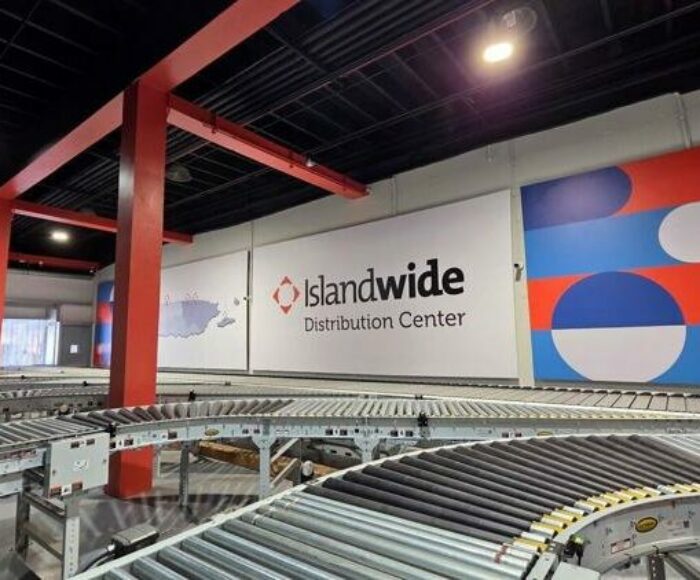
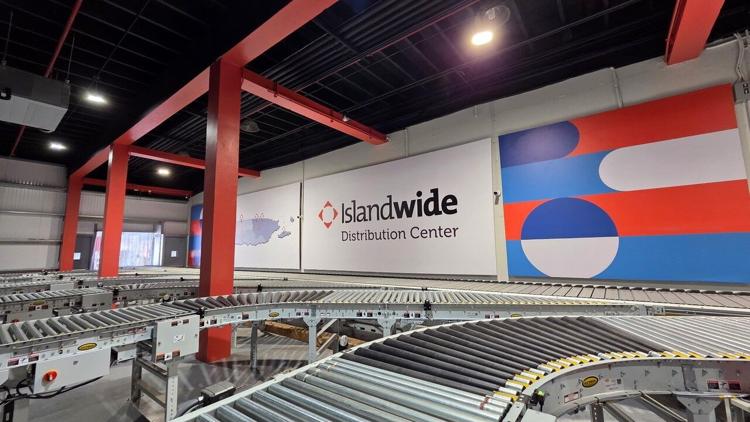
IslandWide Group, a Puerto Rican company specializing in logistics, distribution, and land transportation services, began operating a new automated package sorting system as part of a strategic expansion supported by $612,000 in financing granted by Sygnus Capital Puerto Rico.

The investment enabled the acquisition and installation of a new conveyor belt sorting system, designed to significantly increase the company’s operational capacity and strengthen the efficiency of its distribution network throughout Puerto Rico. The system has the capacity to process up to 3,000 packages per hour and is expected to increase operational productivity by approximately 500% compared to the previous equipment.

The financing transaction made the manufacturing of the system possible, a process whose production and installation required additional time due to the equipment’s specific specifications and the complexity of its integration into the company’s operations.

Founded in Puerto Rico, IslandWide offers land transportation, package delivery, commercial distribution, and integrated logistics solutions to clients in sectors such as healthcare, telecommunications, banking, retail, food, and manufacturing. The company has a distribution network that covers the entire Island and handles the pickup, sorting, and delivery of merchandise. In addition, it offers same-day and next-day delivery services, as well as warehousing and inventory management solutions for corporate clients.

IslandWide operates under a logistics model of interconnected distribution centers and terminals, similar to that used by international courier and freight transportation companies. The company has terminals in Ponce, Arecibo, Mayagüez, Carolina, Caguas, and Toa Baja, all connected to its main distribution center in Guaynabo. At these facilities, packages collected throughout Puerto Rico are consolidated, sorted, and redistributed daily for overnight transportation and next-day delivery.

For IslandWide, the new platform represents a fundamental modernization of the infrastructure that supports the daily movement of packages and merchandise between its terminals and distribution centers. The system replaces equipment from a previous generation that had been in operation for nearly two decades and incorporates new automation capabilities that will allow the company to handle higher shipment volumes during extended operating hours and facilitate earlier morning deliveries. It will also integrate technological tools that will provide clients with greater visibility into their shipments through automated notifications and visual confirmations of package handling and delivery.

“Financing for specialized infrastructure and equipment is essential to supporting the evolution and competitiveness of Puerto Rican companies such as IslandWide, which play a fundamental role in the Island’s commercial logistics and supply chain,” said Marian De Jesús, Business Development Director at Sygnus Capital Puerto Rico. “We are pleased to support an investment that will have a direct impact on the company’s operational efficiency, service capacity, and future growth.”

“This project represents an important component of IslandWide’s ongoing development and operational evolution,” said Pedro J. Rosaly, Chief Executive Officer (CEO) of IslandWide Group. “In the current environment, in which fewer financial institutions are actively participating in this type of financing, having alternatives such as Sygnus makes an important difference for local companies seeking to continue growing and investing in infrastructure and equipment. Throughout our relationship, we have worked together on several financing transactions and have always found a team that is agile and committed to understanding our business needs.”

With this investment, IslandWide seeks to strengthen its position to meet the sustained growth in demand for distribution and logistics services in Puerto Rico, in an environment where speed, traceability, and operational efficiency have become critical factors for both commercial clients and consumers. The modernization of its infrastructure will allow the company to strengthen its service capacity and continue expanding its operations as one of the leading local providers of transportation and package handling services in Puerto Rico.


V3G2EJHFRJF33CJYGLTFYNVZOU

Sygnus Capital Bets on Puerto Rico as a Hub for Alternative Financing in the Caribbean

Sygnus Capital Bets on Puerto Rico as a Hub for Alternative Financing in the Caribbean

The firm sees growth opportunities on the island in sectors including energy, healthcare, tourism, and even music production

September 12, 2026 – 11:10 p.m.

By: Itzel Rivera | Journalist


Beres Grey – CEO Sygnus Capital and Co-Founder Sygnus Group

A decade after its founding, Sygnus Capital is betting on Puerto Rico’s continued consolidation as one of the Caribbean’s leading markets for alternative financing, while identifying opportunities across sectors ranging from renewable energy, healthcare, housing, and tourism to music production.

For the firm’s executives, Sygnus Capital, which has deployed more than $700 million in alternative investments across Puerto Rico and the Caribbean, the biggest challenge today is not a lack of projects but the limited availability of flexible capital for businesses that cannot always find the financing structures they need through traditional banks.

“There should be another 25 firms like Sygnus Capital on the island so that more businesses have the opportunity to succeed,” said James Connor, chief executive officer (CEO) of Sygnus Capital Puerto Rico, in an interview with Negocios.

Connor actually laid the groundwork for Sygnus about two decades ago when he founded Acrecent Financial, a company that was acquired by Sygnus roughly four years ago.

According to Connor, the non-bank commercial financing market represents less than 0.5% of Puerto Rico’s economy. In the United States, alternative financing represents approximately 7% of gross domestic product (GDP).

“It is an extraordinarily underdeveloped market. There are not enough participants or enough dollars to meet the needs,” he said.

Berisford Grey, co-founder and chief executive officer (CEO) of Sygnus Group, explained that this gap is precisely what has driven the growth of private credit in the Caribbean over the past 10 years.

When the company began operations in Jamaica in 2016, the concept of private credit was virtually unknown to much of the regional market, he said.

Today, he said, institutional investors, fund managers, and midsize companies recognize the instrument as an alternative for financing acquisitions, expansions, equipment purchases, and infrastructure projects.

“The biggest transformation [over this decade] has been the institutionalization of the market,” Grey said, adding that “today there is greater awareness of private credit as an asset class, and we have succeeded in expanding the amount of capital available to businesses.”

As evidence of that evolution, he noted that over 10 years, the group’s aggregate private credit portfolio grew from approximately $16 million to $500 million.

Puerto Rico as a Strategic Market

Grey emphasized that the island occupies a strategic place in the company’s growth plans because it is one of the largest economies in the Caribbean. Puerto Rico is even larger in economic size than 13 other U.S. jurisdictions, the investment banker noted, highlighting the ties between the Puerto Rican and U.S. economies as well as the island’s potential access to Latin American markets.

“Puerto Rico is a natural bridge between North America and the Caribbean,” he said.

That position, he continued, provides access to industries with limited presence in other Caribbean markets, including biopharmaceuticals, medical devices, and parts of the health sciences sector, while also facilitating discussions with U.S. institutional investors.

Connor added that oversight by the U.S. Securities and Exchange Commission (SEC) strengthens Puerto Rico’s credibility among international investors, although he acknowledged that a significant perception challenge remains.

“Puerto Rico often ends up in a kind of limbo. Some investors do not know whether they should view it as part of the United States or as an emerging Caribbean market,” he said.

In his view, one of the biggest opportunities over the next decade will be attracting more institutional capital from the Puerto Rican diaspora to finance productive projects on the island.

“The needs are measured in billions of dollars,” Connor reiterated. “The opportunity is there. We need to continue attracting capital to meet those needs.”

 Growth Sectors

Beyond access to capital, both executives identified specific sectors that offer some of Puerto Rico’s greatest growth opportunities over the next five to 10 years.

Healthcare, Connor emphasized, remains the leading sector in Sygnus Capital Puerto Rico’s portfolio because of the ongoing need for investment in medical equipment, technology, and hospital infrastructure.

“We like to say that we complain a lot about the healthcare system, but very few investors actually direct capital toward the sector,” he said, adding that the firm is working on financing a large-scale healthcare-related project.

He also explained that after announcing $17.1 million in financing for solar projects last May, the firm is now backing the development of a utility-scale solar facility as part of a broader strategy to continue supporting renewable energy projects on the island.

“We are all waiting for some magic solution to appear and solve Puerto Rico’s energy problem, but that is not going to happen overnight,” he said.

 Looking Ahead

Another sector the firm views with optimism is tourism. Connor noted that Puerto Rico still lags significantly behind other Caribbean destinations in areas such as the number of hotel rooms.

He also pointed to the development expected around Roosevelt Roads over the next 15 years.

“I heard that the developer behind that major project near Roosevelt Roads is an internationally recognized developer. Lots have sold for between $4 million and $6 million each. That is benefiting, in part, from the development taking place around Roosevelt Roads. Think about that: residential lots selling [at those prices] without even having a house built on them. Again, real estate, hospitality, housing… there will be a hotel there. It’s fascinating,” he said.

Reshoring and the Creative Industries

Opportunities associated with reshoring, the strategy of encouraging companies to bring operations and supply chains back to the United States and its surrounding regions, are also part of the picture. Although Connor acknowledged that major manufacturers and pharmaceutical companies typically have access to other sources of financing, he said there is an opportunity to support companies that “are part of that supplier chain.”

One economic sector that generates particular enthusiasm among Sygnus executives, yet rarely appears among the priorities of financial intermediaries, is music production.

“Somehow, the island has become a huge exporter of urban music to the world,” Connor said.

Grey agreed that Puerto Rico’s economic development will depend to a significant extent on strengthening its integration with the rest of the Caribbean. One of the main challenges, he said, continues to be the regulatory fragmentation among the region’s various countries.

According to the CEO, the region needs to move toward “greater harmonization of rules related to pension funds, alternative investments, and capital markets” to enable the movement of greater resources and attract more investors.

Although he acknowledged that the region competes with larger markets elsewhere, he stressed that the Caribbean offers political stability and strong regulatory frameworks.

“This is not about telling the Sygnus story […]. What matters is telling the story of those businesses that, at one point, could not secure $1 million, $5 million, or $10 million to develop a hospital, build a solar plant, or grow their business, and that today have that opportunity,” he concluded.


https://www.elnuevodia.com/negocios/banca-finanzas/notas/sygnus-capital-apuesta-a-puerto-rico-como-el-proximo-eje-del-financiamiento-alternativo-en-el-caribe/?utm_source=LinkedIn&utm_medium=Social&templateId=OTB2HAZL1TSY&templateVariantId=OTB2HAZL1TSY&experienceID=EXRSL2YIUINN


Public Employees Will Have a New Financing Alternative

Public Employees Will Have a New Financing Alternative

Public Employees Will Have a New Financing Alternative

A $25 million transaction will allow Puerto Rico Loan Funding SPV I, LLC to expand financing opportunities for public servants and retirees through direct payroll or pension deductions.

June 11, 2026 – 11:10 PM

Efraín Montalbán Ríos | Business Journalist at El Nuevo Día


Obtaining financing requires much more than simply having a company’s books in order, according to Sygnus Capital Vice President Jesús D. Mattei.


Public employees in Puerto Rico will have access to another financing option after Puerto Rico Loan Funding SPV I, LLC finalized a $25 million transaction with Sygnus Capital Puerto Rico, enabling the expansion of loan access.

According to Eric Delgado, Business Development Manager at Sygnus Capital, the funding is intended to serve a segment of the market that has traditionally had more limited access to financial products.

“A $25 million transaction provides enough capacity to expand the public-sector market, not only to members of the Police Association, but also to other public-sector employees, such as those in the Department of Education, retirees, municipal employees, and personnel from other government agencies who can benefit from these financing products,” Delgado said.

Puerto Rico Loan Funding SPV I, LLC is an entity that manages loans of up to $5,000, with terms of up to three years and competitive interest rates, specifically designed to serve the public sector, Delgado explained.

The platform originates and services consumer loans for public-sector employees and retirees in Puerto Rico. One of the key features of this financing model is that payments are made through direct payroll deductions, reducing collection risk for the lender while simplifying repayment for borrowers.

Puerto Rico Loan Funding SPV I operates in partnership with the Puerto Rico Police Members Association (AMPRR), which serves as its primary origination and distribution channel, Delgado noted.

“There is a pipeline of employees who want to access the platform because of the benefits it offers—particularly the quick access to financing. Since Puerto Rico Loan Funding is the exclusive entity working with the Police Members Association on this program, it clearly enjoys a competitive advantage,” Delgado added.

Before the $25 million financing transaction, the program’s loan portfolio totaled nearly $9 million, representing between 3,000 and 4,000 loans held by public servants, according to Delgado. Sygnus expects the number of loans to double within the next two years.

According to information provided by the investment firm, the transaction has the potential to impact a broad market of approximately 400,000 public-sector employees and retirees in Puerto Rico.

Delgado also noted that many public-sector workers face limited access to traditional banking products, particularly those with lower credit scores or nontraditional credit profiles. As a result, there is growing demand for alternative financial tools that are structured, accessible, and reliable.


Link to article: https://www.elnuevodia.com/negocios/banca-finanzas/notas/empleados-publicos-tendran-una-nueva-alternativa-de-financiamiento/?templateId=OTB2HAZL1TSY&templateVariantId=OTB2HAZL1TSY&experienceID=EX10ZRKRQLDE

JOWIDBIZGFAU7OCKSU2LSBEURU

The problem is not access to capital – It’s Preparation

The problem is not access to capital – It’s preparation

Many companies continue to concentrate their key decisions in one or two people, a dynamic that can be seen as a risk, explains financier Jesús D. Mattei

April 26, 2026 – 11:07 PM


Obtaining financing requires much more than simply having a company’s books in order, according to Sygnus Capital Vice President Jesús D. Mattei.

In Puerto Rico, many strong businesses — including family-owned companies with decades of history — face challenges when trying to finance their growth, not because they lack potential, but because they enter the process without having built the foundations that capital providers require.

There is a common perception that approaching a bank simply involves presenting financial statements and explaining a need. In reality, it is a far more demanding process: a structured evaluation designed to determine whether a company represents a manageable risk. And that evaluation is not defined in a single meeting. It is determined long before that point.

In practice, every financial institution conducts its own due diligence. The difference between companies that gain access to capital on favorable terms and those that do not lies in who leads that process. The best-positioned companies conduct that evaluation internally first.

What Is a Bank Really Evaluating?

First, the quality of financial information. It is not enough to provide statements prepared solely for tax purposes. What lenders seek is consistency, traceability, and, above all, future visibility. Credible projections with clear assumptions carry as much weight as historical results. A company that cannot explain how it plans to grow will struggle to justify why it needs capital.

Second, operational dependency. Many companies continue to concentrate key decisions in one or two people. From a credit perspective, this is not efficiency — it is risk. The absence of clear management structures and defined processes limits scalability and reduces third-party confidence.

Third, corporate formality. Informal agreements, incomplete documentation, or ambiguous structures create friction throughout the process. Capital providers seek certainty: they want to understand who is in control, how decisions are made, and what mechanisms exist to manage conflicts. Without that clarity, even viable transactions can stall.

Timing and the Right Door

Fourth, the relationship with the financial system. The best financing terms are rarely negotiated during moments of urgency. They are built over time through transparency, consistency, and credibility. At the same time, the ecosystem has evolved: private funds and specialized credit structures now complement traditional banking, enabling more flexible solutions when needed.

One common mistake is treating all capital as interchangeable. It is not. The financing structure must align with the intended use of funds. Financing long-term growth with short-term debt can create unnecessary pressure on cash flow and compromise operations.

It is also necessary to anticipate difficult questions. Customer concentration, resilience during economic downturns, and supplier dependency are among the factors that will always be evaluated. Avoiding these issues does not improve the perception of risk; understanding and managing them does.

In our experience, the most common limitations in financing processes are not caused by structural weaknesses within the business itself, but by a lack of preparation in presenting the company properly. And that preparation requires discipline, not urgency.

Puerto Rico has a resilient business community. But scaling to the next level requires adopting more rigorous practices. Access to capital should not be viewed as a transactional event, but rather as a capability that is continuously developed.

Ultimately, capital does not evaluate numbers alone. It evaluates clarity, structure, and execution capacity. Companies that understand this stop chasing financing and begin attracting it.

https://www.elnuevodia.com/opinion/la-opinion-experta/el-problema-no-es-el-acceso-a-capital-es-la-preparacion/?utm_source=LinkedIn&utm_medium=Social

FFSGPFPWXFCJ7NDW2VZ5EZR2PU

Sygnus Capital Channeled $101.3 Million in Alternative Financing in Puerto Rico

Sygnus Capital channeled $101.3 million in alternative financing in Puerto Rico

The firm grew 12% last year and anticipates investment opportunities in Puerto Rico’s manufacturing and civil defense sectors.

February 5, 2026 – 12:00 PM
By Efraín Montalbán Ríos
Business Reporter


Last year, Sygnus channeled capital to about 15 medical institutions, representing approximately $36.5 million, or 36% of the total.

Sygnus Capital Puerto Rico closed last year with $101.3 million in alternative financing provided to companies across various economic sectors on the island, according to James Connor, the firm’s chief executive officer (CEO).

Compared to its 2024 results, the firm deployed more than $90 million in capital last year, representing an increase of approximately 12.22%.

“Institutions like ours that operate in this emerging private capital sector are taking the pulse of the market. We are highly focused on identifying where the gaps in the market are and how they align with the priorities expressed by local and federal governments,” Connor explained.

During the past year, Sygnus expanded into the energy resilience sector, providing alternative capital for the development of two solar energy system projects and, according to the executive — who has 25 years of experience providing capital in Puerto Rico — the firm will soon announce another large-scale initiative.

More Than $36 Million Directed to the Healthcare Sector

Over the past several years, the private capital firm has expanded its client portfolio within the healthcare industry, channeling capital last year to approximately 15 medical institutions, representing around $36.5 million, or 36% of the total financing provided, according to Connor.

One example was the company’s support of Grupo Hospitalario Quirós through a $15 million financing agreement to execute an ambitious expansion plan for healthcare infrastructure and critical medical services.

Likewise, Sygnus financed $5.2 million in sustainable cities and community projects. Over the past 12 months, at least two housing developments on the island received support.

The firm also financed the development of four boutique hotels and, according to Connor, expects to complete financing this year for another tourism project in Cabo Rojo.

“We cover nearly the entire island. The area that is somewhat less covered is the central region of the island, but I hope that changes over time,” Connor said.

Sygnus Capital, formerly known as Acrecent Financial Corporation, is an alternative investment firm that offers financial solutions by providing businesses and investors with direct financing opportunities.

Institutions that provide alternative financing often serve as lifelines for companies facing critical financial situations, where traditional financial institutions are unwilling to assume the lending risk.

Focused on Industry and Defense

Although Sygnus already serves part of Puerto Rico’s manufacturing sector, Connor emphasized that it will become even more significant this year due to opportunities to attract more companies to the island as part of local and federal reshoring policies.

In 2025, nearly $2.6 million — or 2.3% of the financing provided by Sygnus — was directed toward the industrial sector.

“It is an opportunity I see, and I believe we should be involved. Not just us — I think all capital providers should help position Puerto Rico as a more relevant manufacturing player,” Connor said.

Additionally, he explained that following the recent military reactivation on the island, another emerging market is national defense, a sector in which Connor says he has already received calls from companies interested in gaining access to capital.

“I can assure you that in the Aguadilla area there must be Puerto Rican companies supplying fuel, maintenance, and an entire support infrastructure that becomes a business opportunity,” Connor stated.

Sygnus Capital’s goal for this year is to reach $150 million in alternative financing for businesses in healthcare, hospitality, renewable energy, housing, manufacturing, defense, and other sectors.


YBKYCSJUSVFRVHSOKQNIJCRFGQ

Sygnus Capital finances multimillion-dollar expansion of Hospital Group

The $15 million agreement is part of an investment exceeding $25 million for new theaters, advanced equipment, and expanded capacity in Bayamón, Mayagüez, and Manatí.

December 8, 2025 – 6:40 PM
By Efraín Montalbán Ríos
Business Reporter


The photo shows a view of the Bayamón Medical Center, managed by the Quirós Group. The financing provided by Sygnus Capital will strengthen the services offered by the Manatí, Mayagüez, and Bayamón Medical Center hospitals; Puerto Rico Children’s Hospital; Mayagüez Medical Center San Antonio; and CT Radiology Complex.

Grupo Hospitalario Quirós finalized a $15 million financing agreement with Sygnus Capital Puerto Rico to carry out an ambitious expansion plan for medical infrastructure and critical healthcare services, Marian de Jesús, business development manager at the alternative financing and investment firm, announced Monday.

The agreement involves Manatí, Mayagüez, and Bayamón Medical Center; Puerto Rico Children’s Hospital; Mayagüez Medical Center San Antonio; and CT Radiology Complex.

The structured financing is part of an ongoing expansion plan exceeding $25 million, which will support, among other initiatives, the development of new facilities, the acquisition of medical technology, and the expansion of specialized programs in cardiology, oncology, pediatric oncology, and post-liver transplant patient care.

“We know there is a great need in the healthcare sector, and we want to do our part. We have always been committed to healthcare and want to continue supporting it,” de Jesús told El Nuevo Día.

“Currently, there are challenges within the industry, and hospitals are closing. Recently, there was news about the closure of Hope Medical Center in Humacao and Hospital del Maestro.”

Discussions to secure the alternative financing began earlier this year, and the transaction was completed last May, de Jesús explained.

Part of the investment — approximately $7 million — will be allocated to the installation of high-tech equipment at the former Hospital San Antonio in Mayagüez, which has been taken over by Mayagüez Medical Center.

The financing will also support the purchase of advanced diagnostic imaging equipment, including state-of-the-art magnetic resonance imaging (MRI) and computed tomography (CT) machines, valued at more than $11 million.

New Services in Bayamón

The expansion plan also includes the development of a new emergency room at Bayamón Medical Center, representing a $30 million investment backed by already approved federal CDBG funds, as well as the addition of 50 inpatient beds to accommodate the growing volume of patients.

According to José L. Quirós, president of the hospital group, these investments respond to the healthcare system’s real and urgent needs.

“We measure success by the lives we are able to impact and the quality of care we provide to our people. With Sygnus’ support, we are bringing world-class healthcare services closer to the communities that need them most. This is about ensuring that patients in Puerto Rico — whether in metropolitan areas or mountainous regions — have access to the same level of medical care found at top-tier hospitals abroad,” Quirós stated.

This financing agreement comes at a time when the hospital group has reached significant milestones as an organization, performing nearly 11,000 catheterizations and more than 600 open-heart surgeries annually. The group has also expanded cancer treatment programs and pediatric bone marrow transplant services.

Focused on the New Year

Shortly before the start of 2025, Sygnus Capital told El Nuevo Día of its interest in strengthening its presence in the healthcare and renewable energy sectors, a goal it achieved by providing more than $16 million in financing for photovoltaic projects, along with this recent hospital group transaction.

De Jesús said that for the remainder of the year and into next year, the firm is evaluating additional financing opportunities within the healthcare sector, particularly with existing clients.

“During this year, we have completed several very important transactions in the healthcare and energy sectors. These are two sectors we are supporting very intensively because we know there is a great need in the country,” de Jesús emphasized.

Sygnus Capital’s goal is to surpass $100 million in alternative financing provided on the island.


6IIONAENKZHV7CG66XAIYV44NA

$100 million to be invested in solar park in San Germán

$100 million to be invested in solar park in San Germán

The project will generate 40 megawatts of energy and is expected to be ready in 2027

November 10, 2025 – 11:10 PM
By Efraín Montalbán Ríos
Business Reporter


Eric Delgado and Matthew Williams, co-founder and chief investment officer of GCI Holdings; and Miguel Román, part of the Solaner Puerto Rico management team.

The company Solaner Puerto Rico One will begin construction of a solar park in San Germán during the first quarter of 2026, supported by Sygnus Capital Puerto Rico, according to Eric Delgado, business development manager at the alternative financing firm.

The solar park will be interconnected with the power grid operated by LUMA Energy and will generate up to 51 megawatts (MW) of solar energy. Of that amount, approximately 40MW will be effectively injected into the grid, backed by battery storage systems.

“In the end, this should result in consumers beginning to see savings on their electricity bills because cheaper energy is being produced,” Delgado said.

Sygnus Capital Puerto Rico is an alternative capital access firm whose business model allows it to assume unique risks by using company assets as collateral and charging relatively higher rates.

The total estimated investment to complete the solar farm development, which will occupy approximately 207 acres of land in San Germán, is $100 million. Sygnus Capital contributed $6 million to the initiative.

The financing will support the design and engineering of the solar park, the acquisition of solar panels, batteries, and other equipment, as well as additional expenses prior to the start of construction.

“We understand all the positive impacts of this project in terms of social impact, lower energy costs, job creation, and most importantly, advancing public policy goals to move Puerto Rico toward clean energy,” Delgado said.

Puerto Rico’s energy transition goal is to achieve 100% renewable energy by 2050, under Law 17-2019, known as Puerto Rico’s Energy Public Policy Act.

According to data provided by Sygnus Capital and Solaner, the project is expected to be completed by October 2027 and will create 200 jobs during the construction phase.

The project is being developed by Solaner Puerto Rico, a company formed by XM Solar Finance and GCI Renewable Power LLC.

Meanwhile, Xan Moore, co-founder of XM Solar Finance, stated that Puerto Rico is part of the company’s vision to bring renewable energy generation to communities with limited access to reliable power and to ensure economic development in the western region of the island.

An Investment With a Multiplier Effect

Moore stated that the solar park will have a multiplier effect by helping retain and create businesses in the area, fostering manufacturing growth, and supporting surrounding communities.

“When you have a reliable energy source, it encourages local companies to remain in Puerto Rico and start businesses in the western region, which has a long-term effect. We can become a catalyst for economic development. You cannot have an economy without reliable energy service for the private sector,” Moore said.

Counterbalance to the End of Federal Loans

Although Moore said Solaner maintains a good relationship with Governor Jenniffer González and San Germán Mayor Virgilio Olivera, he acknowledged that collaboration with the Puerto Rico Electric Power Authority (PREPA) and the Fiscal Oversight and Management Board must be strengthened to create policies that encourage development and lower costs.

“Given that the federal Department of Energy loan program is no longer available to leverage these projects, the cost of developing them is higher. That is why private capital is necessary, and naturally, its costs are higher. For a company like ours, we will continue carrying out these projects, but we need PREPA and the Fiscal Oversight Board to understand that these projects are more expensive and help us achieve a financial structure that allows us to develop them without federal incentives.”

Despite the challenges of accessing capital and the high costs associated with large-scale solar energy developments, Solaner Puerto Rico projects $2 billion in future industrial solar and battery storage installations in other parts of the island, including Yabucoa.

So far this year, Sygnus has closed approximately $16 million in alternative loans for the solar energy sector. The first was disbursed last July to Pura Energía in the amount of $10 million for the installation of residential and commercial photovoltaic systems.

“These renewable energy projects are creating the space for transformation, especially within the private sector, to reduce costs and bring clean energy,” Delgado said, adding that the company is also evaluating another 60-megawatt project in Hatillo.

PR-Deal-1

Sygnus Capital provides $5.4 million construction loan for housing development The project adds to the company’s portfolio of real estate investments

Published: W Journal

Sygnus Capital provides $5.4 million construction loan for housing development

The project adds to the company’s portfolio of real estate investments

Sygnus Capital provides $5.4 million construction loan for housing development

Sygnus Capital Puerto Rico has closed a $5.4M construction loan to Centric Holdings LLC to build Centric Contemporary Urban Residences, a 24-unit community in Ponce’s San Antón Ward, highlighting the need for sustainable housing solutions. Pictured (seated L-R) are Eric Delgado Torres, Private Credit Business Development Manager at Sygnus Capital Puerto Rico; Abel Misla, Misla Villalba Group; Nannette Pérez, Portfolio Manager, Investment Banking, Sygnus Capital Puerto Rico; and Daniel Muler López, Account Manager, Investment Banking, Sygnus Capital Puerto Rico. Standing (L-R) are attorneys-at-law, Marta Ramírez Isern, Carlos Batista, and Jennifer Gomez Kiss.

Sygnus Capital PR LLC is deepening its footprint in Puerto Rico’s real estate sector with the closing of a $5.4 million construction loan to Centric Holdings LLC for the development of Centric Contemporary Urban Residences, a 24-unit housing development in Ponce.

The transaction reflects Sygnus’ growing influence in one of the Caribbean’s most competitive property markets and its commitment to funding high-impact projects that address critical housing needs.

“This investment underscores Sygnus’ commitment to strategically deploy capital where it can create meaningful community impact. By financing high-impact developments in underserved markets, we are enabling access to affordable housing and solidifying our role in Puerto Rico as a strategic investment partner”, said Eric Delgado, Business Development Manager, Sygnus Capital PR LLC.

The project will provide modern, affordable homes with features including approximately 1,500 square feet of living space across two levels, three bedrooms, three full bathrooms, 10-foot ceilings, private parking, and outdoor living areas, including a private patio and garden. These are designed to meet the needs of working families and middle-income residents.

This latest transaction adds to Sygnus’ growing portfolio of real estate investments across Puerto Rico and the Caribbean. The company sees Puerto Rico as a a strategic growth market, thanks to its blend of private credit with community-focused real estate development.

“At Sygnus, we believe capital can build the future. We’re honored to support developers like Centric who share our commitment to transforming communities through intentional, inclusive investment”, said Raúl Cacho, Head of Private Credit, Sygnus Capital Puerto Rico.

The project will be located in Ponce and will be led by veteran Puerto Rican entrepreneur and real estate developer, Abel Misla. The construction loan will fund the project from groundbreaking, expected in the fourth quarter 2025, through to completion, with sales projected to begin mid-2026.

68b75de8a7358

Beyond traditional financing: expanding access to capital through syndicated private credit structuring

Published: El Vocero de Puerto Rico (Link)


[Opinion] Beyond traditional financing: expanding access to capital through syndicated private credit structuring


Puerto Rico’s business community continues to transform. More and more companies are seeking to optimize their capital structure, refinance legacy debt, or access funding for growth. However, even with the progress of our financial markets, many mid-sized and expanding companies face limitations when trying to obtain financing solutions that respond to their complexity and scale.

In this scenario, syndicated private credit structuring presents itself as an alternative to traditional financing. Although widely used in developed markets, in Puerto Rico they still represent an underexplored resource with great potential for impact.

A syndicated loan allows several financial institutions to jointly provide credit to the same client. This allows companies to access higher amounts of capital, spread the risk among different stakeholders, and negotiate flexible structures tailored to their needs. In practice, they are especially useful when credit from a single institution falls short or lacks the required flexibility.

What makes the difference today is that local capacity already exists to guide companies through this process. In the past, structuring syndicated financing required a level of specialization and coordination that was not always available on the island. Companies often had to rely on external advisors or foreign institutions. That landscape is changing with the presence of more players in the private lending sector and the development of a more diverse financial ecosystem.

The growth of private lending institutions has expanded the options for midsize companies seeking capital outside the traditional banking system. Private syndications, also known as Club Loans or Private Credit Syndications, are increasingly common. These can be structured as unitranche facilities, split-lien schemes, or combinations of asset-based loans with term loans.

Since these instruments are custom-designed, they require a level of planning beyond what traditional commercial banking typically offers. Therefore, banks are not always the ones who originate them. However, experience shows that many institutions are willing to participate once the structure is defined and the credit package is properly prepared.

Local firms such as Sygnus Capital Puerto Rico already have the infrastructure and expertise necessary to offer formal advice on the structuring and management of syndicated loans. This means that companies do not have to face the process alone or rely solely on external actors. The advice begins by identifying the real objective of the transaction, whether it is to refinance debt, recapitalize the balance sheet, or raise funds for expansion. It continues with the design of a clear and viable structure that defines the term, guarantees, covenants, and risk distribution. It culminates with the presentation of the proposal to several financial institutions, generating a competitive environment that increases the client’s options.

The value of this model can be summed up in three key aspects. First, it brings clarity to the process, helping the company precisely define what it needs. Second, it ensures customization, because each transaction is tailored to the specific needs of the client and their industry. And third, it fosters competition, since involving multiple entities generates different offers, giving the client greater control over terms and conditions.

In a market like Puerto Rico, where access to capital can still feel limited, syndicated private credit structuring offers a path to new opportunities. They allow for a shift from bilateral negotiations with a single bank to a comprehensive and coordinated approach that connects companies with a broader range of financial resources.

This model also represents an opportunity for the broader ecosystem. Banks, advisors, investors, and business leaders can benefit from a more collaborative and transparent framework, where capital is better aligned with the goals of each business. As local capacity to advise and execute these transactions continues to strengthen, the efficiency and impact of each transaction on the economy will also increase.

At Sygnus, we understand that this is a step forward not only for our firm, but also for the country’s financial development. The more tools we have to connect capital with opportunities, the more resilient, dynamic, and competitive Puerto Rico’s economic ecosystem will be.