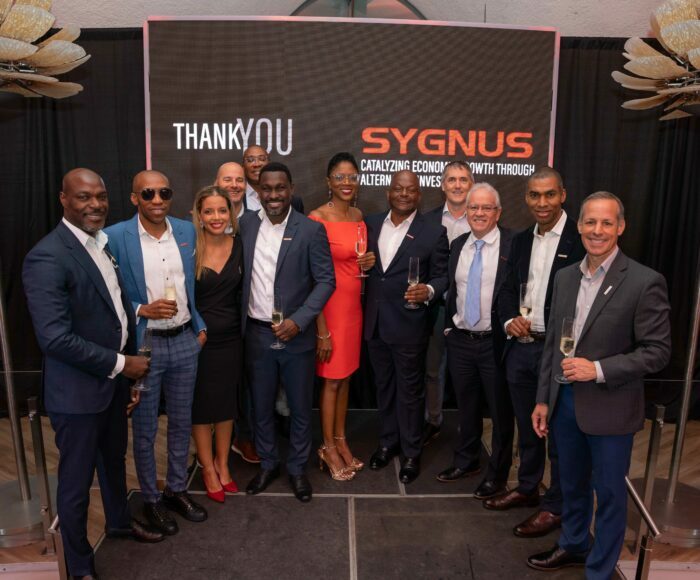


Sygnus Capital Bets on Puerto Rico as a Hub for Alternative Financing in the Caribbean
The firm sees growth opportunities on the island in sectors including energy, healthcare, tourism, and even music production
September 12, 2026 – 11:10 p.m.
By: Itzel Rivera | Journalist

Beres Grey – CEO Sygnus Capital and Co-Founder Sygnus Group
A decade after its founding, Sygnus Capital is betting on Puerto Rico’s continued consolidation as one of the Caribbean’s leading markets for alternative financing, while identifying opportunities across sectors ranging from renewable energy, healthcare, housing, and tourism to music production.
For the firm’s executives, Sygnus Capital, which has deployed more than $700 million in alternative investments across Puerto Rico and the Caribbean, the biggest challenge today is not a lack of projects but the limited availability of flexible capital for businesses that cannot always find the financing structures they need through traditional banks.
“There should be another 25 firms like Sygnus Capital on the island so that more businesses have the opportunity to succeed,” said James Connor, chief executive officer (CEO) of Sygnus Capital Puerto Rico, in an interview with Negocios.
Connor actually laid the groundwork for Sygnus about two decades ago when he founded Acrecent Financial, a company that was acquired by Sygnus roughly four years ago.
According to Connor, the non-bank commercial financing market represents less than 0.5% of Puerto Rico’s economy. In the United States, alternative financing represents approximately 7% of gross domestic product (GDP).
“It is an extraordinarily underdeveloped market. There are not enough participants or enough dollars to meet the needs,” he said.
Berisford Grey, co-founder and chief executive officer (CEO) of Sygnus Group, explained that this gap is precisely what has driven the growth of private credit in the Caribbean over the past 10 years.
When the company began operations in Jamaica in 2016, the concept of private credit was virtually unknown to much of the regional market, he said.
Today, he said, institutional investors, fund managers, and midsize companies recognize the instrument as an alternative for financing acquisitions, expansions, equipment purchases, and infrastructure projects.
“The biggest transformation [over this decade] has been the institutionalization of the market,” Grey said, adding that “today there is greater awareness of private credit as an asset class, and we have succeeded in expanding the amount of capital available to businesses.”
As evidence of that evolution, he noted that over 10 years, the group’s aggregate private credit portfolio grew from approximately $16 million to $500 million.
Puerto Rico as a Strategic Market
Grey emphasized that the island occupies a strategic place in the company’s growth plans because it is one of the largest economies in the Caribbean. Puerto Rico is even larger in economic size than 13 other U.S. jurisdictions, the investment banker noted, highlighting the ties between the Puerto Rican and U.S. economies as well as the island’s potential access to Latin American markets.
“Puerto Rico is a natural bridge between North America and the Caribbean,” he said.
That position, he continued, provides access to industries with limited presence in other Caribbean markets, including biopharmaceuticals, medical devices, and parts of the health sciences sector, while also facilitating discussions with U.S. institutional investors.
Connor added that oversight by the U.S. Securities and Exchange Commission (SEC) strengthens Puerto Rico’s credibility among international investors, although he acknowledged that a significant perception challenge remains.
“Puerto Rico often ends up in a kind of limbo. Some investors do not know whether they should view it as part of the United States or as an emerging Caribbean market,” he said.
In his view, one of the biggest opportunities over the next decade will be attracting more institutional capital from the Puerto Rican diaspora to finance productive projects on the island.
“The needs are measured in billions of dollars,” Connor reiterated. “The opportunity is there. We need to continue attracting capital to meet those needs.”
Growth Sectors
Beyond access to capital, both executives identified specific sectors that offer some of Puerto Rico’s greatest growth opportunities over the next five to 10 years.
Healthcare, Connor emphasized, remains the leading sector in Sygnus Capital Puerto Rico’s portfolio because of the ongoing need for investment in medical equipment, technology, and hospital infrastructure.
“We like to say that we complain a lot about the healthcare system, but very few investors actually direct capital toward the sector,” he said, adding that the firm is working on financing a large-scale healthcare-related project.
He also explained that after announcing $17.1 million in financing for solar projects last May, the firm is now backing the development of a utility-scale solar facility as part of a broader strategy to continue supporting renewable energy projects on the island.
“We are all waiting for some magic solution to appear and solve Puerto Rico’s energy problem, but that is not going to happen overnight,” he said.
Looking Ahead
Another sector the firm views with optimism is tourism. Connor noted that Puerto Rico still lags significantly behind other Caribbean destinations in areas such as the number of hotel rooms.
He also pointed to the development expected around Roosevelt Roads over the next 15 years.
“I heard that the developer behind that major project near Roosevelt Roads is an internationally recognized developer. Lots have sold for between $4 million and $6 million each. That is benefiting, in part, from the development taking place around Roosevelt Roads. Think about that: residential lots selling [at those prices] without even having a house built on them. Again, real estate, hospitality, housing… there will be a hotel there. It’s fascinating,” he said.
Reshoring and the Creative Industries
Opportunities associated with reshoring, the strategy of encouraging companies to bring operations and supply chains back to the United States and its surrounding regions, are also part of the picture. Although Connor acknowledged that major manufacturers and pharmaceutical companies typically have access to other sources of financing, he said there is an opportunity to support companies that “are part of that supplier chain.”
One economic sector that generates particular enthusiasm among Sygnus executives, yet rarely appears among the priorities of financial intermediaries, is music production.
“Somehow, the island has become a huge exporter of urban music to the world,” Connor said.
Grey agreed that Puerto Rico’s economic development will depend to a significant extent on strengthening its integration with the rest of the Caribbean. One of the main challenges, he said, continues to be the regulatory fragmentation among the region’s various countries.
According to the CEO, the region needs to move toward “greater harmonization of rules related to pension funds, alternative investments, and capital markets” to enable the movement of greater resources and attract more investors.
Although he acknowledged that the region competes with larger markets elsewhere, he stressed that the Caribbean offers political stability and strong regulatory frameworks.
“This is not about telling the Sygnus story […]. What matters is telling the story of those businesses that, at one point, could not secure $1 million, $5 million, or $10 million to develop a hospital, build a solar plant, or grow their business, and that today have that opportunity,” he concluded.